“The supplier gave us a true one-stop parts solution. Their team matched the right Caterpillar, Perkins, and filter parts for our equipment, and the support stayed fast and professional from inquiry to delivery.”
Caterpillar Genuine Engine Parts Supplier | Direct from China
A buyer gets a quote at 8:12 a.m., it’s 17% under the dealer number, the photos look clean enough, the salesman says “genuine” three times in two emails, and by Friday everyone is acting like the sourcing problem is solved when, really, the trouble hasn’t even started yet. It works. Usually?
Table of Contents
Most buyers aren’t sourcing parts — they’re buying a story
But here’s the ugly truth: in this trade, plenty of people aren’t selling metal, tolerances, or traceability. They’re selling reassurance. The wording is slick, the PDFs are tidy, the carton shots are cropped just right, and the part only becomes “complicated” after payment clears and somebody finally asks for serial-fitment proof.
I frankly believe that’s why so many supposedly smart purchases go sideways. Not because China is automatically risky. Not because every non-dealer supplier is shady. Because buyers confuse a low FOB number with a controlled supply chain. Big mistake.
And the money floating around this ecosystem is not small. Caterpillar itself said services revenue hit a record $24 billion in 2024, after $23 billion in 2023, while the company kept pushing toward a $28 billion services goal; it also reported full-year 2023 sales and revenues of $67.1 billion. That’s not background noise. That’s why the inbox fills up with real suppliers, gray-channel traders, and costume-jewelry versions of both. See the Caterpillar annual report CEO message. Big market. Dirty edges.
“Genuine” is not a vibe, and “OEM” is not a magic password
Yet this is where buyers get lazy.
They’ll hear “genuine Caterpillar engine parts” and “OEM Caterpillar engine parts” in the same conversation, nod along, then sign off like those terms are basically cousins when, from my experience, that sloppy thinking is exactly where the trouble starts — especially when the seller keeps drifting back to adjectives instead of documents. Don’t do that.
A genuine Caterpillar part is being represented as authentic Cat-branded replacement stock. That matters. “OEM,” meanwhile, gets abused nonstop. Sometimes it means the original component maker. Sometimes it means a parallel channel. Sometimes it means “please stop asking questions.” Same word. Very different exposure.
Direct from China? Fine. Blind sourcing? That’s where people get smoked
China is a geography.
I don’t have the ideological hang-up some buyers have. Direct from China can make sense — fast, competitive, sometimes sharper than regional middlemen who add margin and little else. But when a supplier can’t explain channel origin, supersession history, or whether the stock is dealer overflow, original manufacturer output, liquidation stock, or aftermarket replacement, I’m out. Fast.
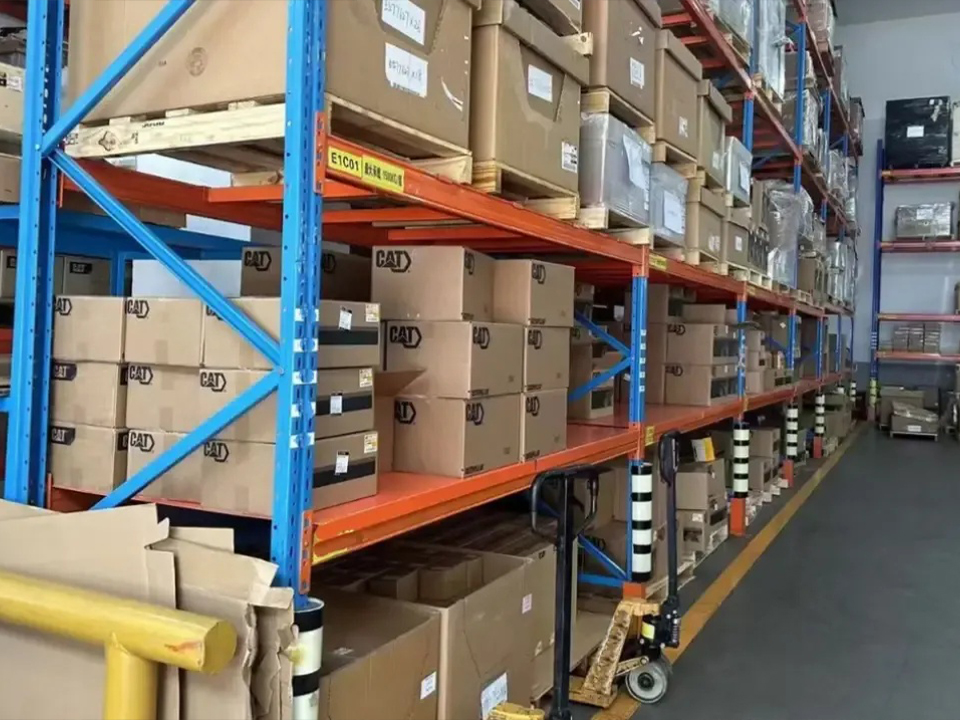
Why? Because “factory direct” is one of those phrases that sounds strong until you ask the next four questions. What Incoterm? What country-of-origin marking? What’s on the commercial invoice? Which serial number breaks apply? Is there Cat-branded packaging, and if so, can you show it clearly — not from six feet away, not half-covered by shrink wrap?
That’s the real split. Not China versus non-China. Documentation versus theater.
Counterfeits aren’t a theory — customs people see them every day
And this part gets ignored because it kills the sales mood.
U.S. Customs and Border Protection said it seized nearly 23 million counterfeit items in fiscal 2023 with an estimated MSRP of $2.4 billion, and its 2024 trade snapshot logged 1,645 counterfeit shipments in February, 1,633 in March, and 1,736 in April. That’s not fringe activity. That’s flow. Read the CBP trade snapshot.
The legal side is even less friendly. CBP’s own bulletin notes that 19 U.S.C. §1526(e) prohibits imports bearing counterfeit marks. So when a seller waves around a “genuine” label but gets slippery the second you ask for traceability, that’s not just a sourcing nuisance — it can become a customs problem, a warranty mess, and a machine-down argument all at once. See the CBP Customs Bulletin. Ugly stuff.
And the counterfeit spillover into parts categories is not imaginary. The OECD’s 2024 UK study found imported counterfeit and pirated goods into the UK totaled GBP 7.1 billion in 2021, with automotive spare parts alone estimated at GBP 2.2 billion; it also found those parts represented 5% of affected sectors, and that 30.4% of fake automotive spare parts were bought by consumers who didn’t know they were fake. That should sober up any buyer who thinks box photos are “verification.” The report is here: OECD counterfeit trade study. Pretty clear.
What I ask for before I approve a PO
Not a brochure.
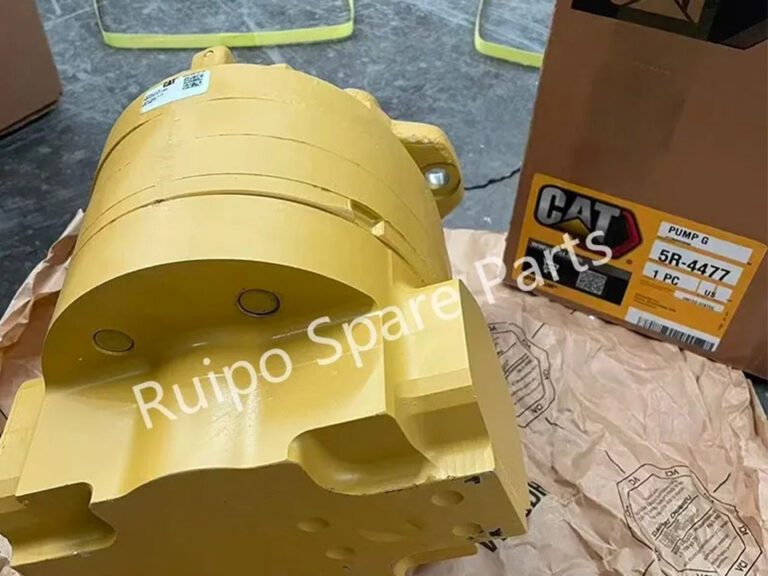
I want the exact Cat part number, machine serial applicability, clear label photos, packaging photos, warranty language in writing, origin disclosure, and — where the category makes it relevant — lot or batch traceability. Then I widen the aperture: superseded number history, carton markings, pallet count, net weight, invoice wording, and whether the supplier can speak in actual iron, not marketing fluff.
From my experience, serious sellers don’t get offended by this. They answer in nouns. In codes. In fitment breaks. They’ll talk about 291-9390, 265-8754, CAT320D, CAT329D, CAT336D, or the CAT374D excavator drive assembly final drive and the Caterpillar 470-8770 final drive without sounding like they’re reading from a sales deck. That’s a good sign.
The weak ones? Same script every time. “Best quality.” “Same as original.” “No problem, my friend.” Which, in parts trading, usually means there is absolutely a problem.
The comparison that actually matters
Label on the quotation
What it usually means in practice
What I demand before payment
Commercial risk
Genuine Caterpillar engine parts
Cat-branded replacement part represented as authentic
Exact CAT part number, label photos, packaging photos, fitment proof, written warranty
Lowest when traceable
OEM Caterpillar engine parts
May be produced by an original manufacturer, but not necessarily sold as Cat-branded service parts
Manufacturer identity, batch docs, no misuse of CAT marks, application proof
Price matters. But only after the paperwork survives contact
Here’s the ugly truth again: a quote that is dramatically below a believable market band is not a “win” yet. It’s a live-fire audit. Real discounts usually come from stock position, channel structure, overhead, or a supplier who actually knows export workflow. They don’t come from mystery metallurgy and miracle packaging.
So no, I don’t chase the cheapest line item first. I’d rather pay a bit more for a traceable part than save 12% on paper and lose five days fighting over labels, missing stamps, or a warranty nobody plans to honor. That’s not cautious. That’s just grown-up procurement.
FAQs
What are genuine Caterpillar engine parts?
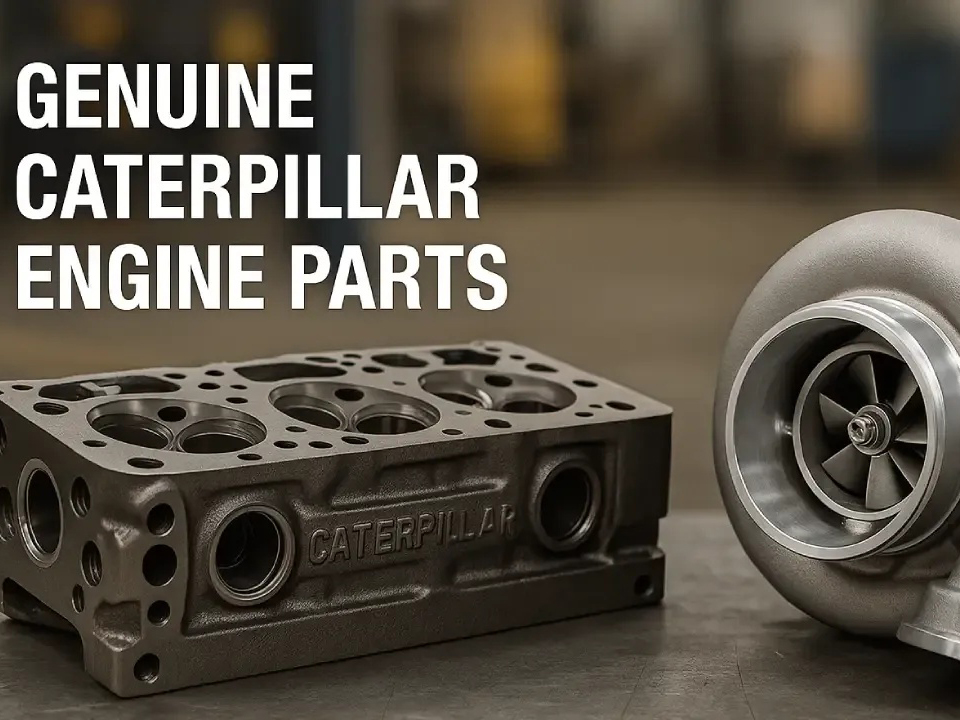
Genuine Caterpillar engine parts are Cat-branded replacement components sold and represented as authentic service parts for specific Caterpillar applications, backed by identifiable part numbers, fitment intent, packaging, labeling, and documentation that should hold up under procurement review, customs scrutiny, and post-sale warranty questions.
That’s the clean version. My version is simpler: if the seller can’t prove what it is, it’s not “genuine” just because the quote says so.
What is the difference between genuine Caterpillar engine parts and OEM Caterpillar engine parts?
Genuine Caterpillar engine parts are marketed and supplied as authentic Cat service parts, while OEM Caterpillar engine parts usually describe components made by an original manufacturer that may not move through Cat-branded aftermarket channels, which changes branding, traceability, warranty posture, and sometimes legal exposure around how the part is represented.
That distinction gets blurred on purpose all the time. I don’t let suppliers get away with it.
Is buying Caterpillar engine parts direct from China safe?
Buying Caterpillar engine parts direct from China is safe only when the supplier can prove part-number accuracy, serial-fitment compatibility, packaging authenticity, export documentation quality, warranty terms, and sourcing clarity, because the real risk is not geography by itself but opaque channels and fake or misrepresented branding.
I’ve bought from China-facing suppliers I’d trust before some local traders. Still — trust without paperwork is just optimism in a hard hat.
How do I find genuine Caterpillar engine parts online without getting burned?
The safest way to find genuine Caterpillar engine parts online is to start with exact part numbers, machine serial data, written warranty terms, label and packaging proof, and suppliers that show operational depth across related assemblies, then eliminate anyone who relies on generic claims instead of traceable evidence.
My quick test? Ask for supersession status, serial applicability, and close-up label photos in one email. The answer tells you more than the homepage ever will.
If you’re trying to source Caterpillar engine parts direct from China, don’t lead with price. Lead with traceability, fitment discipline, packaging proof, and whether the seller sounds like they’ve actually handled iron, cartons, and customs paperwork before. That’s how you separate a real Caterpillar genuine parts supplier from a quote factory.