“The supplier gave us a true one-stop parts solution. Their team matched the right Caterpillar, Perkins, and filter parts for our equipment, and the support stayed fast and professional from inquiry to delivery.”
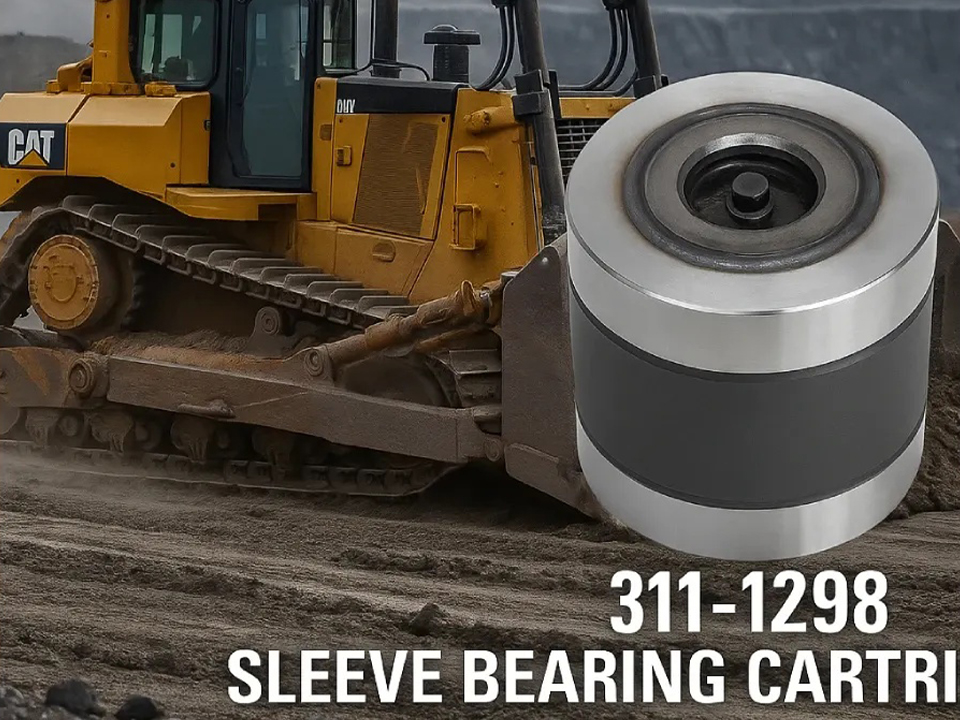
311-1298 Sleeve Bearing Cartridge (Bogie Pin) for Cat Dozers
This part lies. It looks like a modest sleeve bearing cartridge, the sort of line item buyers approve with one lazy click, but on a Cat dozer the 311-1298 bogie pin sits in the exact zone where impact loading, alignment drift, dirty lubrication history, and bad procurement habits stop being theory and start becoming repair invoices. Want the hard truth?
I’ve seen too many fleets treat a bogie pin like a commodity. And I think that mindset is one of the dumbest habits in heavy equipment parts buying. When a 311-1298 bogie pin starts wearing out, the machine rarely announces it with dignity; it whispers through side-play, uneven tracking, accelerated shoe and roller complaints, and noise that gets blamed on everything except the part that is actually going bad.
Table of Contents
The 311-1298 bogie pin is not a throwaway part
The name sounds boring. The job is not. A 311-1298 sleeve bearing cartridge is there to let the bogie articulate under real dozer loads without turning the undercarriage into a loose, shock-fed mess. Once tolerance opens up, the machine starts redistributing stress in ugly ways. Not always instantly. But steadily.
Here is my view: most buyers focus on invoice price because the cartridge itself looks small compared with the machine around it. That is procurement theater. The real number is the cost of rework, downtime, secondary wear, and the very real chance that a misdiagnosed bogie issue sends you hunting in the wrong assembly first, whether that means a Cat 353-0585 final drive or a genuine Caterpillar 227-6189 final drive travel reduction gearbox.
And this is happening in a market where budget pressure is not imaginary. Caterpillar said Construction Industries sales fell 8% in Q4 2024 and segment profit fell 24% year over year; that does not prove one cheap part is bad, but it absolutely helps explain why buyers are being pushed toward thinner purchasing decisions and louder “equivalent part” promises.
Fitment is where buyers get burned
Model names mislead people. Buyers search “311-1298 bogie pin for D8R D9R D8T,” and that is fine for SEO, but I would not sign off on a purchase from model-only language. I want serial verification, application confirmation, and a sober look at the rest of the undercarriage before I call the cartridge guilty or innocent.
That matters because bogie complaints are serial liars. Side movement, clunking, odd track behavior, and accelerated wear can overlap with other issues, including surrounding driveline stress. So when I review a machine event, I do not isolate the cartridge in a vacuum; I compare the whole story against adjacent assemblies like the genuine Caterpillar 199-4747 final drive and the genuine Caterpillar 227-6132 final drive GP. Different part numbers, same lesson: bad diagnosis is expensive.
Where cheap cartridges usually fail first
I have no patience for catalog poetry. “Premium grade.” “OEM quality.” “High performance.” Fine. Show me the dimensional control, surface finish consistency, bearing integrity, and repeatable fit.
Because this is what I usually see in the field: the bargain cartridge does not always fail with a cinematic crack. More often it wears prematurely, starts carrying load badly, introduces slop, and then drags other components into the argument. That is why a Cat bogie pin assembly cartridge cannot be judged by whether it physically installs. Installation is the easy part. Staying stable under shock, reverse travel, and blade load is the real test.
And yes, I am opinionated here. Most aftermarket disasters are not “bad luck.” They are buyers mistaking interchangeability for equivalence.
How to replace 311-1298 bogie pin without making the second mistake
Removal is mechanical. Judgment is harder. A proper 3111298 pin as-cartridge replacement starts with confirming that the bogie bore, mating surfaces, retainers, and surrounding wear pattern have not already been distorted by running loose. If you skip that inspection, you can install a fresh cartridge into a tired housing and then blame the new part for old damage.
My sequence is simple. Clean first. Measure before force. Inspect the surrounding metal, not just the removed cartridge. Check for witness marks that tell you the load path has shifted. Then install the replacement with fitment discipline, not shop-floor improvisation. If the machine has already been running with abnormal movement, I want a second set of eyes on adjacent undercarriage wear before the dozer goes back to work.
I do not romanticize shortcut maintenance. OSHA says there were 5,283 fatal work injuries in 2023, and an OSHA release from January 2024 notes 484 workplace deaths in 2022 from being struck by an object or equipment, with about 75% of struck-by fatalities involving heavy equipment such as trucks or cranes. In a separate OSHA accident detail, a heavy equipment operator performing maintenance on August 12, 2024 was struck during a pressurized equipment event and later died from those injuries. Different machine, same ugly lesson: rushed maintenance zones punish people fast.
The downtime math nobody likes to run
Here it is. A 311-1298 sleeve bearing cartridge is cheap only if it stays in tolerance and keeps the bogie honest. If it does not, the buyer gets hit twice: once at purchase, again when the machine comes back apart.
That second bill is where the industry plays dumb. Not because people cannot count, but because they often do not want to count the whole stack: mechanic time, stalled production, collateral wear, reinspection, reshipping, and the reputational cost of telling operations the dozer is down again. So the “best 311-1298 bogie pin for Cat dozers” is rarely the lowest listed price. It is the one that fits correctly, lasts predictably, and does not turn a maintenance window into a repeat visit.
What to check before you buy
I want four answers before approval. Has the seller verified application by serial or authoritative interchange? Is the cartridge described with enough precision to separate it from generic bogie-pin language? Is there any indication of actual quality control beyond marketing fluff? And does the supplier understand that a Caterpillar dozer undercarriage bogie pin is part of a load path, not a decorative steel cylinder?
That is not me being dramatic. That is me being tired of watching buyers approve the wrong part, then asking the mechanic to rescue the math.
Field decision table for the 311-1298 bogie pin
Signal on the machine
What it usually suggests
What I do next
Risk if ignored
Noticeable side-play at the bogie
Cartridge wear, bore wear, or both
Inspect cartridge and surrounding housing before ordering
Fast repeat wear and unstable tracking
Noise under load changes
Load transfer is no longer clean
Compare bogie condition against nearby undercarriage and driveline components
Misdiagnosis and unnecessary parts spend
Uneven wear pattern nearby
The problem is already spreading
Audit rollers, shoes, retainers, and alignment together
One-part fix fails
Cartridge installs but feels “off”
Fitment or housing issue, not just parts issue
Stop and measure rather than forcing final assembly
New part gets blamed for old geometry
Cheapest quote has vague wording
Seller may be leaning on broad interchange language
Demand verified application details
False economy
FAQs
What is a 311-1298 bogie pin?
The 311-1298 bogie pin is a sleeve bearing cartridge assembly used in specific Cat dozer bogie applications to support controlled articulation, stabilize load transfer, limit unwanted movement, and help the undercarriage carry pushing and shock loads without accelerating surrounding wear.
In plain English, it is one of those parts that looks minor until it stops holding geometry the way it should.
How do I know a 311-1298 sleeve bearing cartridge is worn out?
A worn 311-1298 sleeve bearing cartridge usually shows itself through side-play, abnormal movement at the bogie, noise under changing load, and wear patterns that start looking inconsistent with normal service, especially when the machine has been running in abrasive ground or with deferred inspection intervals.
I never judge it by sound alone. I want movement, wear marks, and housing condition in the same conversation.
Is an aftermarket Cat dozer bogie pin always a bad idea?
An aftermarket Cat dozer bogie pin is not automatically a bad choice, but it is only acceptable when application fit, dimensional control, material consistency, and supplier accountability are strong enough to make the part genuinely equivalent in service life rather than merely similar in appearance and mounting.
That distinction matters more than the label on the box. I would rather buy one verified aftermarket cartridge than three mystery bargains.
Does 311-1298 fit D8R, D9R, and D8T dozers?
The phrase “311-1298 bogie pin for D8R D9R D8T” is a useful search variation, but fitment should be confirmed against serial-specific application data, parts records, and machine configuration because model-family shorthand is not the same thing as verified interchangeability.
That is my rule every time. Search by model. Buy by verification.
If you are sourcing a 311-1298 bogie pin now, do not treat it like a throwaway line item. Verify fitment, inspect the housing, review neighboring wear, and compare the full downtime cost instead of chasing the prettiest low quote. That is how professionals buy parts, and that is how dozers stay at work instead of coming back to the shop for the same argument twice.