“The supplier gave us a true one-stop parts solution. Their team matched the right Caterpillar, Perkins, and filter parts for our equipment, and the support stayed fast and professional from inquiry to delivery.”
The Complete Spare Parts List for Perkins 1506A-E88TAG3 Engine (Maintenance & Overhaul Guide
That’s the hour when a “complete parts list” turns into a joke, because a 1506A-E88TAG3 doesn’t care what the sales rep promised on Tuesday afternoon; it cares whether the right filter, the right sealing hardware, the right fuel-side bits, and the right control-side pieces are actually on the shelf when the set drops a no-start, starts hunting under load, or begins heat-soaking like it has somewhere better to be. Perkins itself places the model inside its electric-power range on perkins.com, and the 1506A-E88TAG family data is pretty blunt: 207-389 kVA, 1500/1800 rpm, 6 vertical inline cylinders, 8.8 litres, 112 mm bore, 149 mm stroke, 16.1:1 compression, turbocharged aftercooling, direct injection, 24-volt starting, an engine-mounted ECM, fuel transfer and priming pump hardware, and full-flow spin-on oil filters. (https://www.perkins.com/en_GB.html)
I’ll say it plainly: I don’t trust any Perkins 1506A-E88TAG3 parts list that isn’t built around the serial plate first. Not a little. Not at all. The people who skip that step usually end up doing what workshop guys call the parts cannon—throwing expensive metal at a fault they never isolated. Perkins more or less says the same thing, just in cleaner language, on perkins.com: parts books, service literature, and OMMs are available online or through the Perkins My Engine app, and those documents split the job between identification, procedure, intervals, refill data, and actual maintenance guidance.
And then there’s the ugly bit.
The aftermarket is full of cosplay engineering—box art, vague compatibility claims, heroic pricing, and intern-level cross-referencing. According to cbp.gov, U.S. Customs and Border Protection said fiscal year 2024 seizures topped 32 million counterfeit items worth more than $5 billion if genuine. I frankly believe every heavy-equipment buyer should read that twice before clicking “equivalent replacement.”
And yes, lead time still bites.
Reuters reported on reuters.com that the Suez route handles 12% of global trade, and Reuters also reported on May 31, 2024 that the spot rate for a 40-foot container from China to North Europe hit $4,615 while China to the U.S. East Coast hit $6,061. So when I tell people to stock smart instead of “ordering when it breaks,” I’m not being dramatic—I’m just tired of watching preventable downtime get dressed up as bad luck.
Table of Contents
Most published parts lists miss the point
But here’s what most sellers still get wrong.
They dump maintenance consumables, failure-containment spares, teardown parts, and full-overhaul hardware into one bloated list and call it complete. It looks busy. It looks authoritative. It’s still wrong. From my experience, a real Perkins 1506A-E88TAG3 spare parts strategy has to separate fast movers from expensive one-offs, because the shelf-stock logic for filters and seals is nothing like the logic for pistons, injectors, or control-side components.
So I split this engine into five buckets: routine service stock, fuel-system parts, cooling and sealing parts, overhaul core parts, and electrical/control hardware. That’s not academic. It’s how you avoid dead money sitting in stores while the one part you actually need is somewhere between a freight terminal and a customs hold.
The maintenance parts that actually earn shelf space
Start boring. That’s the trick.
Routine parts don’t look glamorous, but they save engines. Oil filters. Fuel filters. Water-separator elements. Air filters. Belts. Hose sets. Clamps. Thermostat-adjacent items. Coolant-service pieces. Small sealing bits everyone loves to ignore until the skid has a wet belly and the operator starts saying the engine is “using coolant.” The official 1506A-E88TAG family spec backs that logic up with exactly the hardware you’d expect—fuel filters, transfer and priming pump support, primary/secondary/water separation, and full-flow spin-on oil filtration.
Fuel side first. Always.
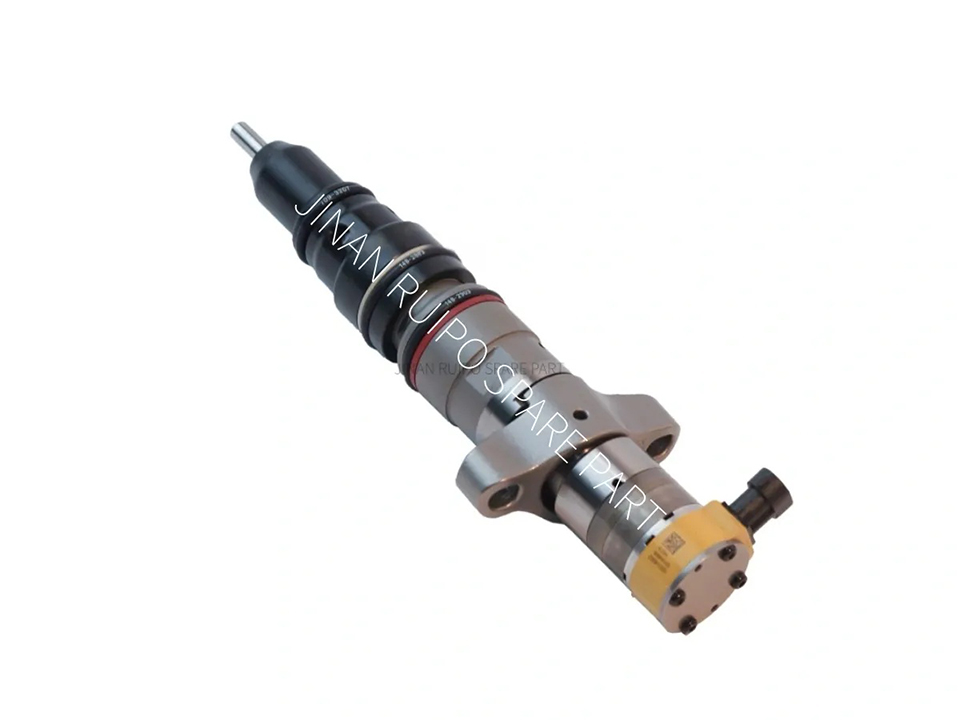
I’ve watched too many people blame bad combustion on “electronics” when the real villain was mucky fuel, lazy filtration, or a lift issue upstream. On this platform, I’d rather over-respect the fuel circuit than under-budget it. That’s why a genuine Perkins T400726 common rail fuel injector for 1506A-E88TAG3 engine belongs in a serious conversation about uptime, not just in a panic cart after rough running shows up under load.
And don’t sleep on low-pressure delivery. People do. Then the set cranks, coughs, and sulks.
What a real overhaul looks like when you stop pretending
Here’s the ugly truth.
A Perkins 1506A-E88TAG3 overhaul kit is not one magic carton. It’s a decision tree. Compression numbers, oil use, coolant condition, blow-by, bearing material, head condition, ring land wear, bore condition, and the history of the last tear-down all matter. If you skip the measurements and order a “full rebuild kit” anyway, you’re not rebuilding—you’re gambling with nicer packaging.
I usually split overhaul thinking into two passes.
First pass: sealing and top-end recovery. That means head-gasket territory, valve stem sealing, heat-cycled hoses, tired clamps, and the injector-side or sensor-side hardware you no longer trust for another service interval. Second pass: hard parts. Pistons. Rings. Bearings. Thrust hardware. Maybe liners, depending on what the strip tells you. Maybe more. And when the numbers say piston condition is no longer a debate, the genuine Perkins T400774 piston kit for 1506A-E88TAG3 engine stops looking expensive and starts looking overdue.
Would I buy every overhaul part in advance?
No. That’s warehouse theater. I would, however, pre-plan the expensive path—because when the engine is already open, indecision gets pricey fast.
The parts manual, the service manual, and the OMM are not the same thing
People mash these together. Bad move.
The Perkins 1506A-E88TAG3 parts manual tells you what exists. The Perkins 1506A-E88TAG3 service manual tells you how not to wreck the job while taking it apart and putting it back together. The Perkins 1506A-E88TAG3 maintenance guide—or more accurately, the OMM—tells you what should’ve been done before failure made the decision for you. Perkins says exactly that on perkins.com: OMMs cover safety, product information, operation, and maintenance details including refill capacities, fluid recommendations, schedules, and procedures.
From my experience, this is where professionals separate from dabblers.
Dabblers search by symptom. Pros search by engine identity, service literature, and fault path. One group buys parts. The other group buys accuracy.
The bits that deserve real money
Not every spare part deserves premium budget. Some absolutely do.
I don’t mind being stingy on generic store consumables around the edges. I do mind false economy on combustion-critical, lubrication-critical, heat-critical, and shutdown-critical components. On this engine family that means injector quality, fuel delivery integrity, oil-side consumables, cooling hardware, gasket control, and anything tied to the ECM or its sensor loom—because once signals go dirty, you can lose hours proving what isn’t wrong. The published 1506A-E88TAG standard-equipment list is already pointing there: ECM on engine, 24-volt starting and charging, HEUI fuel, primary and secondary filtration, water separation, and full-flow oil filtration.
It gets even less romantic when logistics go sideways.
A lot of buyers still behave as if the global freight chain is a vending machine. It isn’t. We’ve all seen the movie by now—delays, surcharges, reroutes, missing container slots, promised ETAs that dissolve on contact. That’s why I tell genset owners to stock the parts that can strand the machine, not the parts that merely look good on an inventory sheet. And yes, I’m thinking about fuel-side failures, no-start hardware, seal failures, and the stuff that turns a routine service call into a 17-hour headache.
Spare parts category
What belongs there
Why I care
What happens when teams cheap out
Routine maintenance stock
Oil filters, fuel filters, water separator elements, air filters, belts, coolant-service items, hose seals
These are the highest-frequency interventions and the easiest wins
Hard starts, heat creep, dirty fuel, nuisance shutdowns
Fuel-system protection
Injectors, lift/priming pump items, fuel-delivery seals, filter heads as needed
Fuel quality problems snowball fast on standby and prime-power units
What is the Perkins 1506A-E88TAG3 spare parts list?
A Perkins 1506A-E88TAG3 spare parts list is the serial-number-matched catalog of routine service items, fuel-system components, sealing parts, electrical controls, and overhaul hardware required to maintain, repair, or rebuild this 8.8-litre power-generation engine without guessing on fitment, revision level, or duty-cycle suitability.
That’s the clean definition. My messier version? It’s the difference between planned uptime and a parts cannon. Start with the parts book and the engine serial. Then build a shelf-stock plan around how the unit is actually used.
Where can I find the Perkins 1506A-E88TAG3 parts manual?
The Perkins 1506A-E88TAG3 parts manual is best sourced through Perkins’ official parts-information and literature channels, where the engine can be identified properly by serial data and matched to the correct parts book, service information, and operation-maintenance content instead of to a generic, copy-pasted PDF floating around the internet.
Perkins says owners and service workers can access parts books, service literature, and OMM content online or through the My Engine experience on perkins.com. That’s where I’d start, every time.
What should be included in a Perkins 1506A-E88TAG3 overhaul kit?
A Perkins 1506A-E88TAG3 overhaul kit should include the sealing package, piston and ring hardware, bearing-side renewals, and any inspection-triggered replacement parts tied to compression, lubrication, cooling, and fuel delivery, with the final contents determined by measured wear, teardown findings, and the exact engine specification—not by a seller’s generic bundle title.
That’s the disciplined answer. The workshop answer is simpler: if the strip shows piston distress, oil-control trouble, or cylinder wear you can’t talk your way around, get serious fast—and that’s where a genuine Perkins T400774 piston kit for 1506A-E88TAG3 engine starts to make very boring, very profitable sense.
How do you maintain a Perkins 1506A-E88TAG3 engine correctly?
Maintaining a Perkins 1506A-E88TAG3 engine correctly means following the official operation and maintenance schedule, protecting fuel cleanliness, replacing filters and seals before they fail in service, watching heat and starting behavior closely, and keeping routine service decisions separate from teardown decisions so you don’t confuse preventive work with rebuild work.
If you’re turning this into a real procurement page or workshop checklist, don’t chase the word “complete.” Chase the serial number, the service literature, and the parts that actually stop the set when they fail. That’s where the money leaks out. And that’s also where smart buyers win.