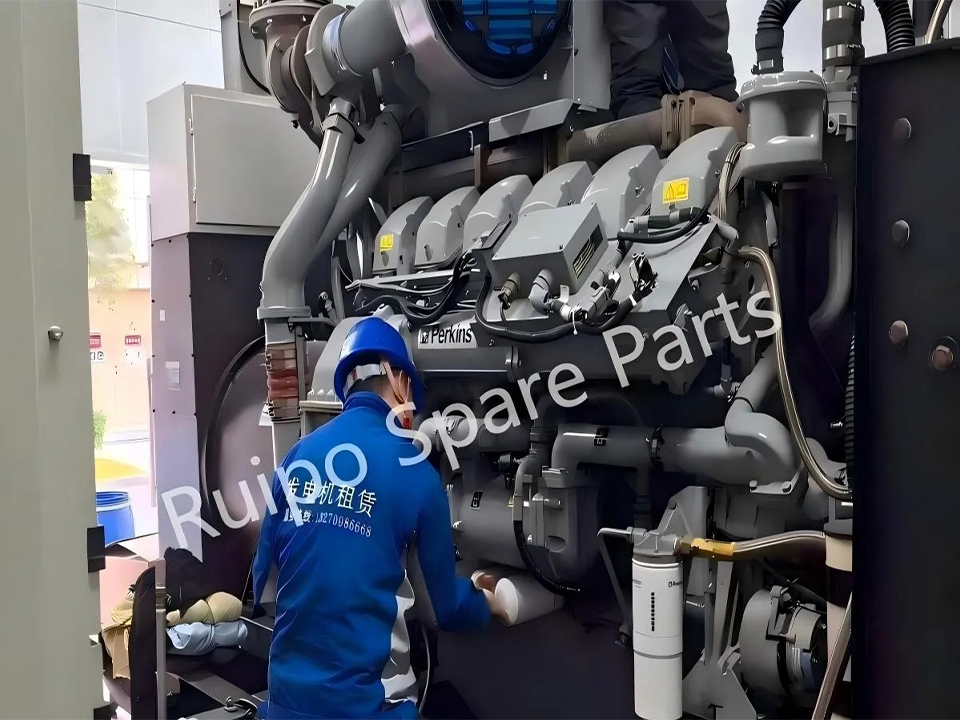
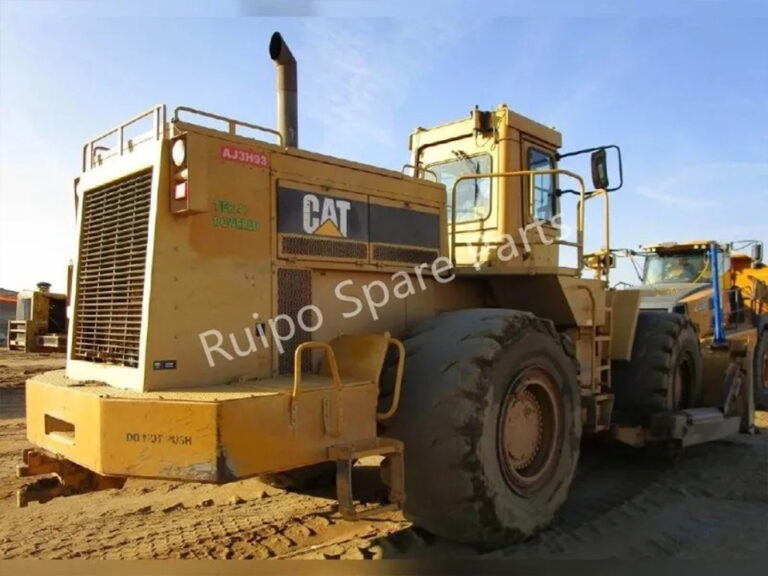
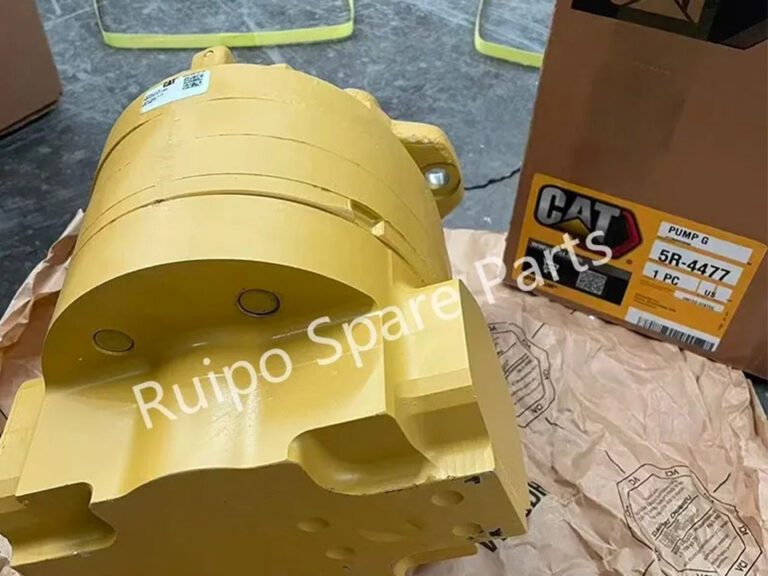
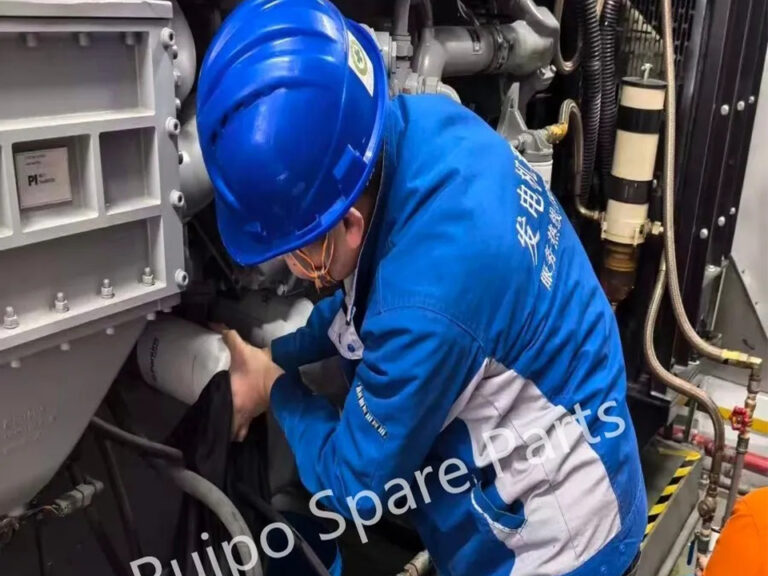
“The supplier gave us a true one-stop parts solution. Their team matched the right Caterpillar, Perkins, and filter parts for our equipment, and the support stayed fast and professional from inquiry to delivery.”
Perkins Engine 4012-46TWG2A: Technical Specifications & Spare Parts Guide
I frankly believe most pages targeting Perkins 4012 engine traffic miss the real buyer entirely, because the person searching this title usually isn’t “browsing content” at all—they’re trying to verify a genset package, avoid a bad PO, or stop a parts-room mistake before it turns into a dark site visit at 2:10 a.m. after a nuisance trip. That’s the job.
Table of Contents
What the title is really telling us
But look at the search intent closely. “Technical specifications” screams informational, “spare parts guide” drags in commercial investigation, and the minute someone starts checking filters, seals, sensors, or hot-side hardware, the query starts leaning transactional even if they haven’t admitted it yet. Who types this stuff for fun?
From my experience, that blend matters more than keyword theory. A plant manager, broker, distributor, or maintenance lead doesn’t want a fluffy overview. They want the fast numbers, the fitment trapdoors, and the ugly sourcing truth no catalog page volunteers unless someone forced it.
The specs that matter, not the brochure fluff
Here’s the ugly truth: on a unit like the Perkins 4012-46TWG2A, buyers love headline kVA and ignore the supporting numbers that actually punish bad decisions later—displacement, cooling volume, lube capacity, duty definition, ambient envelope, and the difference between “4012” as family shorthand and the exact build that showed up on the skid. That difference bites.
If I were sanity-checking a live package, I’d start with the 4012-46TWG2A ElectropaK datasheet, not the seller’s product blurb. The engine is listed as a 12-cylinder 60° Vee, 45.842-litre, turbocharged, air-to-water charge-cooled diesel with 13:1 compression ratio, 177 litres of lube capacity, 196/201 litres coolant capacity depending on temperate versus tropical setup, and a cooling system designed for ambient temperatures up to 50°C. At 1500 rpm, the sheet lists 989 kVA baseload, 1250 kVA prime, and 1385 kVA standby net generator output. Those aren’t decoration. They’re the skeleton of the buying decision.
Yet people still buy off shorthand. “It’s a 4012.” No. It’s never just a 4012.
Why the serial plate matters more than your supplier’s confidence
And this is where the parts game gets sloppy. Perkins’ own Operation and Maintenance Manuals page tells users to identify the engine family and type code from the initial letters on the engine serial number, found on the data plate or the sales order acknowledgement. That’s not admin trivia. That’s the gatekeeper to the right book, the right bill of materials, and the right service path.
I’ve seen this too often: someone says they need “Perkins 4012 engine spare parts,” the seller says “no problem,” and then the wrong thermostat arrangement, seal size, or electrical item arrives because nobody bothered to ground the order in the serial plate. Then the blame gets kicked downhill to maintenance. Classic.
Perkins also hammers the 4000 Series angle in its TengizChevrOil Generators case study: 12 cylinders, 46-litre displacement, strong load acceptance, and component commonality across the 4000 Series that makes parts replacement easier. Easier, yes. Universal, no. That little distinction is where the smart money lives.
The parts categories that actually deserve your attention
Routine service items are one lane. Shutdown-trigger parts are another. Big-ticket failure parts are their own headache entirely.
I’d split the buying stack three ways. First, the consumables and PM stuff: oil, fuel, filters, belts, coolant-related service pieces. Second, the gremlins that create false drama—switches, sensors, control-side hardware, harness-adjacent failures. Third, the expensive pain: injectors, turbo hardware, pumps, heads, and anything that sends you into outage-planning mode instead of stores-issue mode.
Cheap parts seduce people. Then the paperwork disappears.
I’m not saying every aftermarket part is junk. I am saying traceability isn’t optional once you’re dealing with a generator engine that exists to carry load when the site can’t afford drama. The pattern shows up far outside diesel power too. In a July 2024 warning, NHTSA’s alert on substandard replacement inflators said three people were killed and two suffered life-altering injuries in the prior year because cheap, faulty aftermarket replacement inflators failed in later crashes. Different hardware, same disease: low price, bad provenance, delayed consequences.
It gets worse. The March 2024 DOJ counterfeit airbag case said the defendant sold about 533 counterfeit airbags, and investigators recovered more than 2,000 counterfeit airbags and parts. That should sober up anybody who still thinks industrial counterfeiting is some fringe annoyance. It’s an operating model.
And the paperwork angle? That’s the part too many buyers still shrug off. Reuters’ report on forged engine-part documents in the AOG Technics affair said 86 falsified release certificates had been identified and the number of engines suspected to contain parts with forged documents had risen to 96. I keep coming back to one line in that piece: the release certificate is basically the part’s birth certificate. Exactly.
The raw numbers, all in one place
I’m keeping the hard figures together here because this is the bit engineers actually screenshot and send around, and yes, it comes straight from the 4012-46TWG2A ElectropaK datasheet.
Item
Verified figure
Why a professional should care
Engine family
4000 Series 4012-46TWG2A
Tells you the platform, parts logic, and documentation path.
Configuration
12-cylinder, 60° Vee
Affects overhaul labor, head count, and packaging.
Displacement
45.842 litres
Confirms this is not a small-frame standby engine; parts and cooling strategy follow from that.
Aspiration
Turbocharged, air-to-water charge cooled
Turbo, charge-air, and cooling parts are not optional details here.
Compression ratio
13:1
Relevant to combustion behavior, diagnostics, and rebuild decisions.
Lube capacity
177 litres
Sets oil-service cost and filter discipline.
Coolant capacity
196 L temperate / 201 L tropical
Cooling-package variant changes what you stock and what you order.
Electrical setup
24V starter motor and 24V alternator
A small line item until it strands a genset at the wrong moment.
Ambient design point
Up to 50°C system design noted in technical information
Matters for hot-climate and containerized installs.
Duty ratings at 1500 rpm
989 kVA baseload / 1250 kVA prime / 1385 kVA standby
The difference between correct application and slow-motion abuse.
Fuel spec reference
BS2869: Class A2
Procurement teams ignore fuel spec at their own expense.
Why this market is only getting more unforgiving
But here’s the commercial angle nobody should ignore: generator demand spikes make bad sourcing habits even more expensive, because lead times stretch, buyers panic, and questionable inventory suddenly starts looking “good enough.” It usually isn’t.
Reuters reported in July 2024 that Generac lifted its annual sales growth forecast and expected 2024 net sales to grow between 4% and 8%, driven by stronger backup-generator demand after Hurricane Beryl. That doesn’t prove anything mystical about one Perkins model, obviously—but it does tell you the standby-power market is still reactive, weather-driven, and vulnerable to rushed purchasing. Rushed purchasing is where junk sneaks in.
FAQs
What is the Perkins 4012-46TWG2A?
The Perkins 4012-46TWG2A is a 12-cylinder, 45.842-litre, turbocharged, air-to-water charge-cooled diesel generator engine in the Perkins 4000 Series, built for 1500 rpm electric-power duty and commonly specified where operators need baseload, prime, or standby performance rather than road-use emissions compliance. After that, everything depends on application, cooling setup, and the exact serial-number trail. Broad family naming helps with orientation; it does not replace proper identification.
How do I identify the correct Perkins 4012 engine spare parts?
The correct Perkins 4012 engine spare parts are the serial-number-matched service and repair components tied to the engine family and type code on the data plate, because “4012” by itself is a family label, not a safe purchasing instruction for filters, seals, sensors, fuel-system parts, or hot-side hardware. Start with the plate. Then pull the right literature. Then call suppliers. Reverse that order and you’re gambling.
What parts should I keep in stock for a 4012-46TWG2A?
A sensible 4012-46TWG2A stock package is a layered inventory of routine PM parts, outage-prone electrical and sensor items, and a few longer-lead failure components, so the site can handle normal service, nuisance protection trips, and the first wave of genuine mechanical trouble without entering panic-buy mode. I’d rather hold fewer parts with clean traceability than a shelf full of maybe-fit junk. That’s my bias.
Are aftermarket Perkins 4012 replacement parts safe?
Aftermarket Perkins 4012 replacement parts are only safe when the supplier can prove serial-number fit, traceable origin, consistent manufacturing quality, and believable paperwork, because on big genset engines the danger usually isn’t the label alone—it’s undocumented substitution, forged certificates, and vague cross-reference claims made under buying pressure. I don’t reject aftermarket on principle. I reject lazy aftermarket. There’s a difference.
If you’re building this page to rank, fine—but write it like somebody who’s had to chase a dead set, a missing certificate, and a wrong seal on the same week. That voice converts better anyway. And more importantly, it sounds like somebody worth listening to.