“The supplier gave us a true one-stop parts solution. Their team matched the right Caterpillar, Perkins, and filter parts for our equipment, and the support stayed fast and professional from inquiry to delivery.”
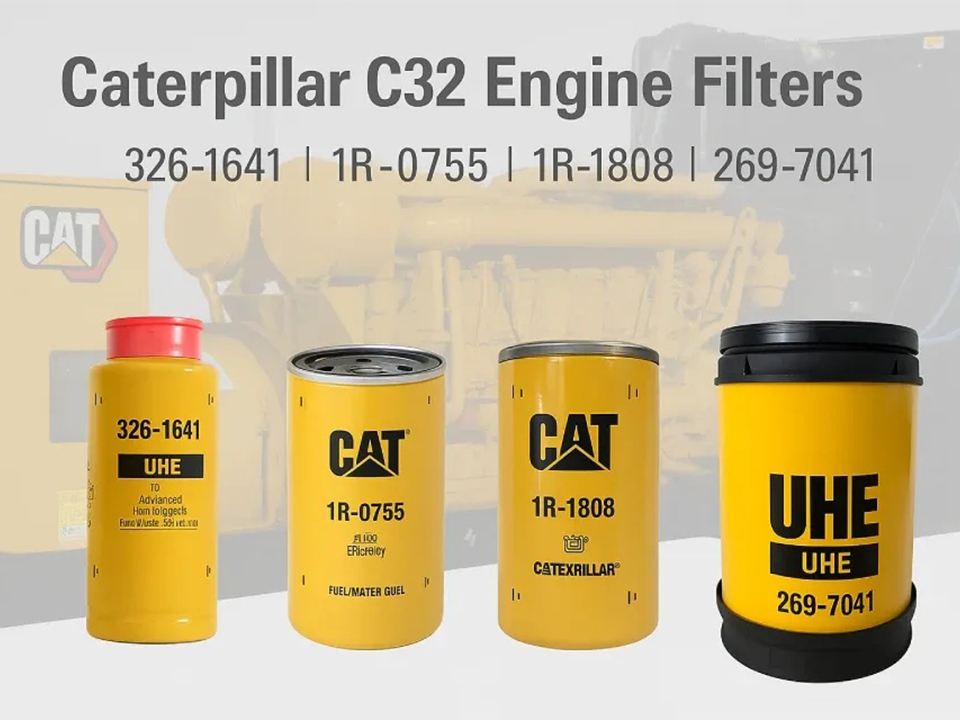
My view is blunt. The four essential Caterpillar C32 filters are the engine oil filter, the primary fuel filter with water separator, the secondary fuel filter, and the engine air filter; everything else in the maintenance conversation is downstream of those four. And yes, the water separator deserves its own seat at the table, because water is not “minor contamination” in a high-value diesel fuel system.
Table of Contents
The dirty truth about Caterpillar C32 filters
Cat’s own documentation tells the story without the sales varnish: the C32 auxiliary engine is built around duplex fuel filters, a primary fuel filter with water separator, and a lube system with oil filtration, while Cat’s parts catalog shows C32-listed examples for oil, fuel-water separation, secondary fuel filtration, and primary air filtration. In other words, “Caterpillar C32 filters” is not one part. It is a contamination-control stack.
Here is the hard truth I wish more fleet managers said out loud: filters are cheap only when they work. Once they fail, they become bearings, injector nozzles, turbo damage, ring wear, downtime, cleanup, and sometimes a fire investigation. In a 2024 NHTSA preliminary evaluation, regulators said they had 27 complaints tied to diesel fuel leaks from a fractured secondary fuel filter housing, with 12 reports describing engine-compartment fires; that was a different engine family, yes, but the lesson is universal and ugly. A filter assembly is not a disposable trivia item. It is a pressure-bearing safety component.
And water? Different sector, same chemistry. In a 2024 FAA advisory, the agency warned that free water in fuel promotes microbial contamination that can cause filter plugging, corrosion, coating damage, and bad fuel sensor readings. So when I say the Caterpillar C32 water separator filter matters, I am not performing SEO theater. I am describing how contamination behaves once water gets invited into the system.
Caterpillar C32 oil filter: the wear report in a can
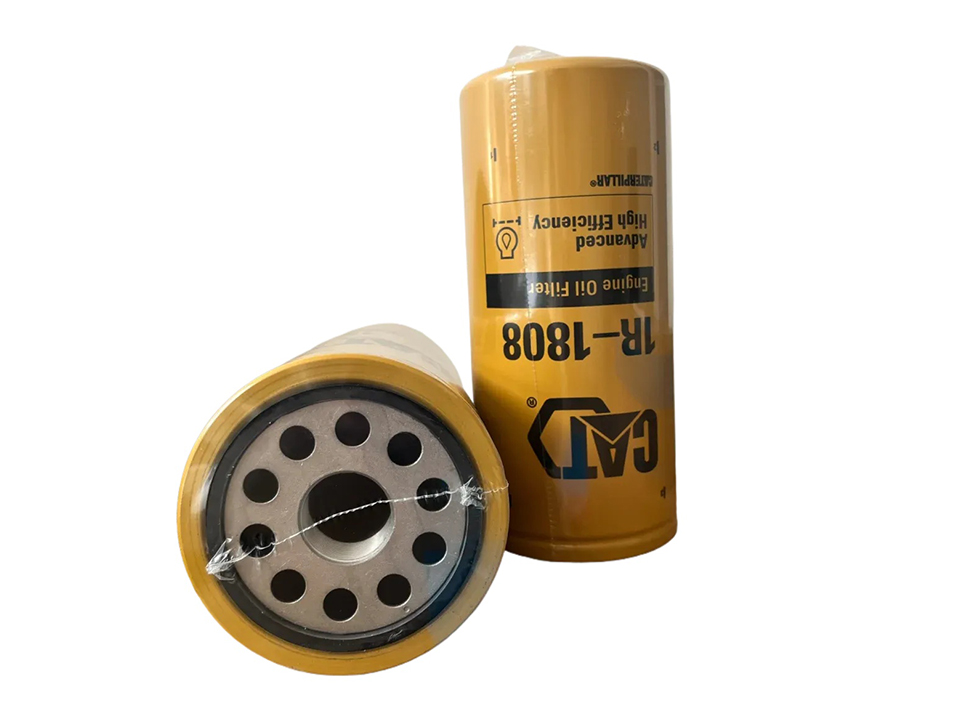
The oil filter is not just there to catch dirt. It is the first forensic report you get before a bearing, crankshaft journal, turbo bearing, or aluminum component starts sending you a bigger bill, and Cat’s C32 manual is unusually direct here: use only oil filters recommended by Caterpillar, cut the old filter open, inspect the pleats, and treat excessive metal as an early-warning signal for pending failure. That is not marketing copy. That is an OEM telling you the filter can become a diagnostic tool.
I like that honesty. Too many maintenance teams swap oil filters as a reflex and throw away the evidence. But if you are running a C32 hard, especially in generator or marine duty, the filter is where early trouble whispers before it starts screaming.
Cat’s parts catalog also lists the 211-4359 engine oil filter as a C32-compatible marine-engine example, and the page frames advanced-efficiency filtration as better contamination control for tighter emission-era tolerances. That fits the broader Cat story around modern large engines: as tolerances tighten, lazy filtration gets more expensive.
If you want a parallel example from another diesel ecosystem, the Perkins 4324909 oil filter replacement is worth reading not because it matches the C32, but because it shows the same old rule I keep repeating: lubrication filtration is cheaper than internal metal.
Caterpillar C32 water separator filter: the filter people underrate
This is the one buyers treat like an accessory.
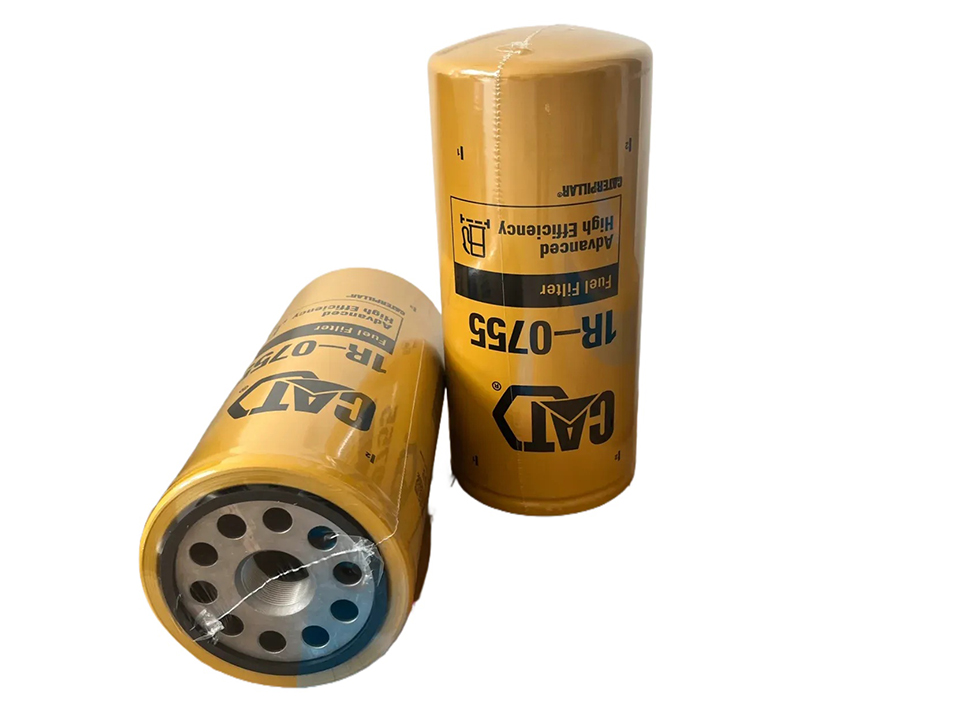
Cat does not. In the C32 operation and maintenance manual, the primary fuel filter/water separator is singled out for a reason: water in the fuel can make the engine run rough, may cause an electronic unit injector to fail, and should trigger replacement before the scheduled interval if contamination is present. Cat even gives a vacuum-gauge change point for the primary filter/water separator at 50 to 70 kPa, or 15 to 20 inches Hg. That is not vague advice. That is operating discipline.
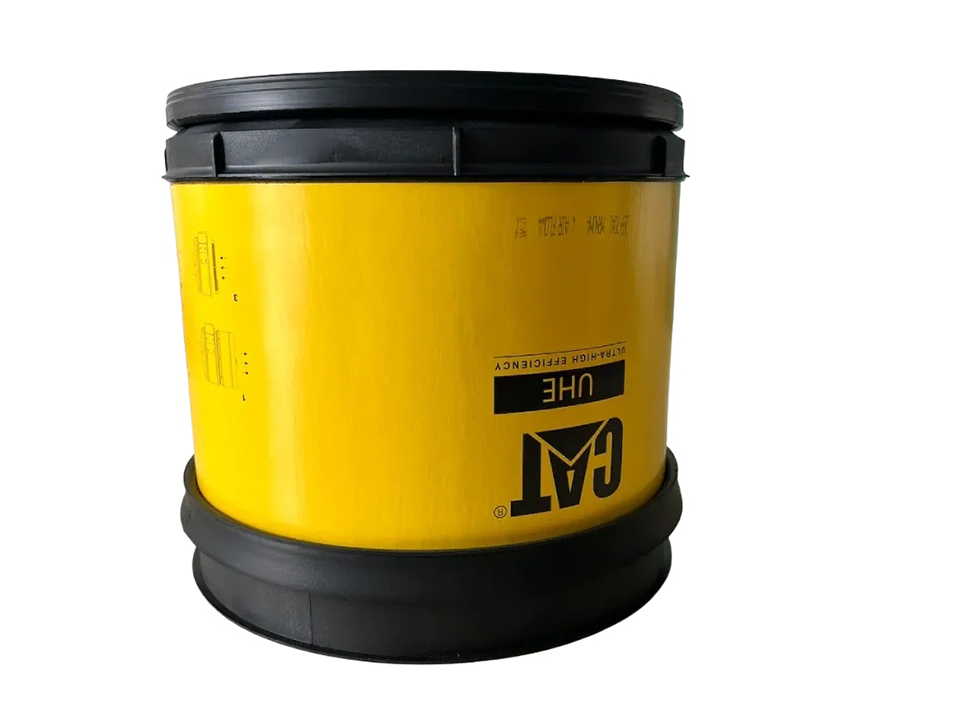
I’ll say something unfashionable: the water separator is often more important than the “fuel filter” in the way non-specialists imagine the system. Why? Because once free water and emulsified water move downstream, you are no longer maintaining a filter train; you are gambling with injectors and corrosion. Cat’s 326-1643 fuel and water separator description says the design is meant to eliminate 100% of free water and 90% of emulsified water while helping extend secondary-filter and injector life. That is as close as you get to a manufacturer writing your business case for you.
Cat’s parts catalog also lists the 311-3901 ultra-high-efficiency fuel water separator as compatible with C32 in certain machine-engine applications, which matters for one reason only: exact part fit is arrangement-dependent, but the architecture is not. The C32 expects water control upstream. Ignore that, and the rest of the filter strategy gets weaker fast.
Caterpillar C32 fuel filter: the secondary stage that gets blamed last
The secondary fuel filter is the last clean-up crew before fuel reaches the expensive bits. Cat’s manual includes a dedicated “Fuel System Secondary Filter – Replace” section and repeats the fire warning about spilled fuel on hot surfaces or electrical components, which tells you two things at once: the part matters for cleanliness, and the service procedure matters for safety.
Now for the part that people hate hearing. A cheap or badly specified secondary filter can fail twice: first by letting contamination through, and second by becoming a leak or housing problem of its own. That is why the 2024 NHTSA probe matters even outside Ford’s world; investigators noted a low-pressure fuel system capable of 8.5 bar while the secondary fuel filter had been tested to 7 bar, with autoignition risk because of nearby heat sources. Different badge. Same mechanical lesson. Don’t bargain-hunt the final filter stage on a high-output diesel.
Cat’s parts ecosystem shows several C32-linked secondary fuel filter references, including 1R-0749 and 422-7587 in C32-related generator and industrial contexts, plus related engine fuel filter elements like 360-8960 appearing alongside C32-compatible assemblies. The exact answer depends on serial number, arrangement number, and application, which is why Cat tells owners to use those identifiers for accurate replacement part selection.
So, when someone searches “how to change Caterpillar C32 fuel filter,” my answer is simple: change the right stage, in the right order, with priming done correctly, and with zero tolerance for sloppy sealing surfaces. Otherwise you are not servicing the engine. You are rehearsing an air-in-fuel problem. Cat’s manual explicitly describes priming the fuel system after primary-filter service, because aeration and leaks are not theoretical.
Caterpillar C32 air filter: the quiet killer
Dust is patient.
And that is why the Caterpillar C32 air filter gets neglected by people who only react to visible symptoms, because the air side usually ruins parts slowly, without drama, until ring wear, cylinder wear, turbocharger distress, and blow-by start looking like “age” instead of what they really are: ingestion. Cat’s manual says never run the engine without an air cleaner element, never run with a damaged element, and warns that dirt entering the engine causes premature wear and damage. It also tells you to watch the service indicator and replace or clean the element when the indicator trips. How much clearer do we need it?
Cat’s 494-6995 primary engine air filter is listed for C32, C32 Marine, and C32B applications, which is useful not as a universal buy recommendation but as proof that air filtration on these engines is application-specific, serial-number-sensitive, and very much part of the official Cat maintenance universe.
This is where dirty air stops being an “air filter problem” and becomes a wear-metals problem. If you need a reminder of where that story ends, look at the 164-4187 piston ring for Caterpillar engines. Rings do not care whether the root cause was procurement laziness, dusty operating conditions, or an ignored service indicator.
And yes, there is a good cross-brand comparison point here too: the Perkins SEV551H-4 air filter replacement is a useful reminder that intake filtration is never glamorous, always necessary, and usually blamed too late.
Cat says to use only recommended oil filters, inspect the removed filter for metal debris, and treat excess debris as a sign of early wear or pending failure.
211-4359 engine oil filter is listed as compatible with C32 marine-engine applications.
Primary fuel filter / water separator
Water control, bulk contamination, injector protection upstream
Cat says water in fuel can cause rough running and injector failure; replace before interval if contaminated, and change the element at 50–70 kPa vacuum.
311-3901 fuel water separator lists C32 compatibility in certain engine-machine applications.
Secondary fuel filter
Final fuel cleanliness before injection hardware
Cat gives it a dedicated replacement procedure and safety warning; NHTSA’s 2024 diesel-filter probe showed 27 complaints and 12 fire reports in another platform when secondary-filter hardware failed near heat.
422-7587 secondary fuel filter is listed in C32-related generator and industrial contexts.
Cat says never run without an element, never run with a damaged one, and replace or clean when the service indicator reaches its trigger condition.
494-6995 primary engine air filter is listed for C32, C32 Marine, and C32B applications.
One more number matters. In Caterpillar’s 2024 segment highlights, Energy & Transportation posted $28.9 billion in sales, and the company said it broke ground on a Lafayette, Indiana, expansion to increase capacity for both new engines and aftermarket parts. Read that however you want; I read it as confirmation that large-engine uptime and parts support are not side businesses. They are central. Filters sit right inside that economics.
FAQs
What are the four essential filters on a Caterpillar C32 engine?
The four essential Caterpillar C32 filters are the engine oil filter, the primary fuel filter with water separator, the secondary fuel filter, and the engine air filter, because those four components intercept soot, metal debris, free water, emulsified water, fuel contamination, and intake dust before they damage hard parts.
That is the real filter hierarchy on a C32. Exact part numbers change by serial number, arrangement number, and application, but the four contamination jobs do not.
How often should I change a Caterpillar C32 fuel filter?
Caterpillar C32 fuel filter intervals are condition- and application-dependent maintenance points, not one-size-fits-all calendar events, because Cat says the primary fuel/water separator should be changed early if water contamination is present and even gives a vacuum-based change threshold of 50 to 70 kPa for the separator element.
That is why I do not trust lazy interval advice copied across generator, marine, and industrial versions. Follow the arrangement-specific maintenance schedule, contamination evidence, and priming procedure.
What is the best oil filter for Caterpillar C32?
The best oil filter for a Caterpillar C32 is the exact Cat-approved or equivalently validated filter specified for the engine serial number, arrangement, and application, because Cat explicitly warns that the wrong oil filter can allow larger waste particles into the lubricating system and accelerate bearing and crankshaft damage.
In practice, I would rather defend an OEM-spec filter choice than explain a bad cross-reference after a teardown. Cat’s own catalog shows C32-compatible examples such as 211-4359 in marine contexts, but fit still depends on configuration.
Can I use aftermarket filters on a Cat C32?
Aftermarket filters for a Cat C32 are only acceptable when they are demonstrably equivalent in fit, efficiency, construction, pressure handling, and application approval to the specified Cat part, because modern large diesels punish vague compatibility claims much harder than older, looser-tolerance engines ever did.
That sounds severe. Good. Fuel and oil filtration are the worst places to save small money and create large uncertainty.
Final word
I’ll end where I started: Caterpillar C32 filters are not housekeeping items. They are the engine’s first legal defense, first contamination defense, and first financial defense, all at once.