“The supplier gave us a true one-stop parts solution. Their team matched the right Caterpillar, Perkins, and filter parts for our equipment, and the support stayed fast and professional from inquiry to delivery.”
I’ve watched managers approve a quick seal swap, reject a proper teardown, and then act offended when the same travel motor comes back wet, noisy, and hungry for a rebuild three weeks later. Why does this keep happening?
Because most people are diagnosing the stain, not the machine.
A final drive oil leak is rarely a one-part story. Sometimes it is a simple outer seal. More often, though, it is bearing movement, plugged breathers, groove wear on the sealing surface, overfill, wrong oil viscosity, or damage done by the last person who hammered the seal in like they were closing a shipping crate. And yes, I’m saying it plainly: a lot of shops do not “repair” final drives; they postpone failure and invoice the owner for the privilege.
Table of Contents
Most final drive oil leak causes are boring, mechanical, and expensive when ignored
The phrase final drive oil leak causes sounds dramatic, but the real list is brutally ordinary. I reduce it to five buckets: sealing surface wear, internal movement, pressure imbalance, contamination, and bad installation. That is the job. Everything else is decoration.
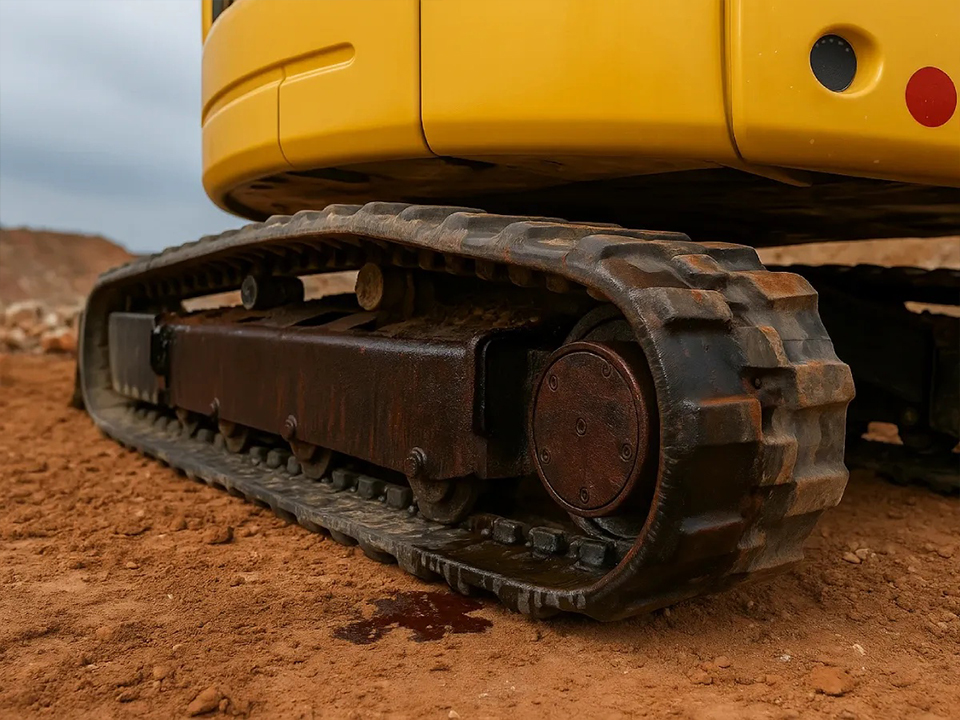
If oil appears around the sprocket or hub, I first suspect the external seal set, the floating seal faces, the wear ring, or shaft movement that has already chewed the sealing surface. If the wetness starts closer to the motor flange, brake housing, or hose connection, the problem may be a final drive hydraulic oil leak rather than a gearbox leak. That distinction matters, because a gear oil leak and a hydraulic leak do not fail, smell, or spread the same way.
And here is the hard truth I wish more fleets accepted: repeat leakage after a recent seal job usually means the seal was never the root cause. It was the witness. The real offender was bearing play, a plugged breather, an overfilled case, a scored seal land, or housing distortion from bad assembly practice. I see this pattern constantly, and I don’t treat “new seal installed” as evidence of anything except recent labor.
The stain does not tell the full story, but the pattern does
The best final drive oil leak symptoms are not just visual. They are sensory, operational, and chronological. Thick oil with that sulfur-heavy gear smell points one way. Thin, cleaner oil that migrates fast points another. A machine that suddenly runs hotter on travel, hesitates on one side, or starts making fine metallic glitter in the drain pan is handing you a confession.
I also care about timing. Did the leak start after a seal change, a track impact, a long hot travel run, a pressure wash session, or winter startup? Those details sound small. They are not. In NREL’s 2024 accelerated seal testing, a main shaft seal showed no barrier-fluid leakage under test conditions until a scheduled power interruption; once the system restarted, the seal lost its ability to prevent water ingress, and the post-test review pointed to assembly and alignment disturbance rather than a simple wear-out story. That is not an excavator final drive, but the lesson is universal: alignment errors and assembly upset can turn a “good” seal into a failed one in one bad event.
What shops miss when they say, “It’s just the seal”
I’m not buying that sentence anymore.
When a final drive leaks, I want three questions answered before anyone orders parts. What fluid is escaping? What allowed it past the boundary? What mechanical condition created that opening? Skip any one of those, and you are gambling with someone else’s downtime.
That is why I treat the diagnostic order below as non-negotiable. It is the fastest way I know to separate a cheap fix from a repair that only looks cheap on day one.
Leak clue
What it usually suggests
Typical root cause
Downtime risk
First verification
Thick oil at sprocket/hub
Gearbox-side leak
Floating seal wear, worn seal land, hub runout
High
Check oil type, seal face condition, hub movement
Thin oil near motor flange
Hydraulic-side leak
Motor case seal, brake piston seal, hose/fitting leak
High
Verify oil source, case drain behavior, flange area
Oil pushing from breather
Pressure or fill problem
Overfill, blocked breather, heat expansion
Medium to High
Confirm oil volume and breather flow
Leak returns soon after seal replacement
Seal was not root cause
Bearing play, shaft scoring, poor installation
Very High
Measure axial/radial movement before reassembly
Metallic paste in drained oil
Internal wear already underway
Bearing damage, planetary wear, contamination
Severe
Drain, inspect magnet/filter, open housing
That ranking is not paranoia. It lines up with how recent OSHA and NREL material frame leak-related failures: the visible leak is often the start of a larger mechanical and safety problem, not the whole problem itself.
Temperature, contamination, and maintenance culture decide whether the leak comes back
This part gets ignored because it is less photogenic than a blown seal.
Seal life is tied to oil condition, temperature stability, and contamination control. Too much heat hardens elastomers, thins oil film, and raises case pressure behavior. Dirt and water do the rest. The fleets that keep winning are not mystical; they are disciplined. They handle cooling, filtration, and fuel-system health before those problems spill into everything else.
And yes, fluid leaks belong in that category. OSHA’s 2024 enforcement material states that poor truck maintenance can contribute to serious accidents from ruptured hydraulic lines, and its 2024 injury summary includes a case in which hydraulic fluid sprayed a worker’s legs and chest, causing a rash. That is what lazy maintenance buys you: exposure, downtime, and compounding damage.
How to fix final drive oil leak problems without doing the job twice
The phrase how to fix final drive oil leak gets thrown around like it has a universal answer. It does not. The correct repair depends on whether the oil is gearbox oil or hydraulic oil, whether the leak is static or load-triggered, and whether the housing has already suffered wear.
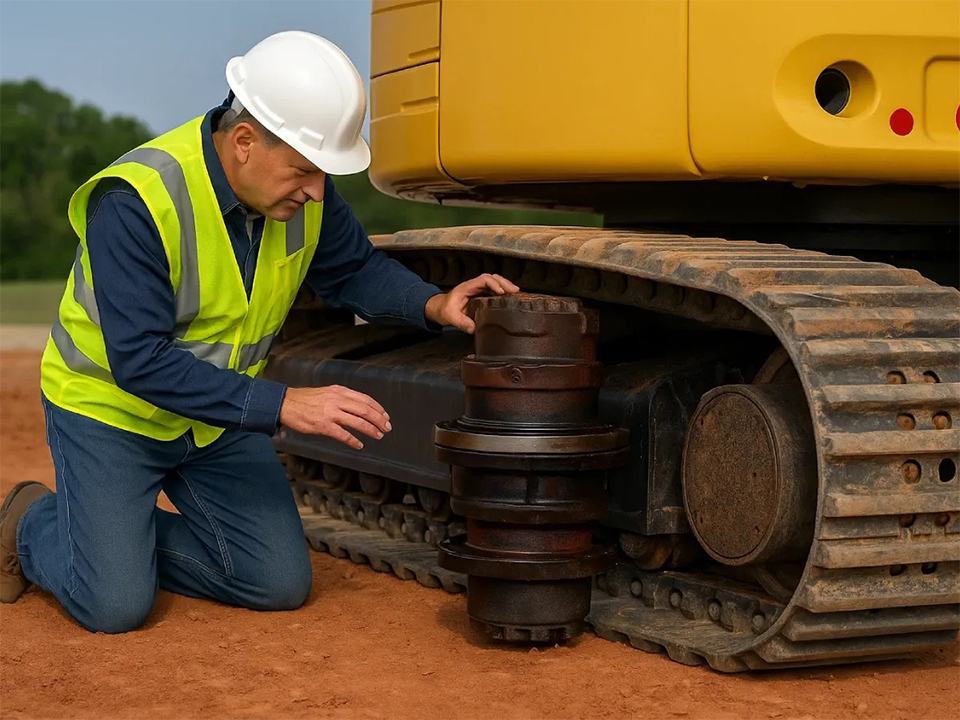
My rule is simple. Identify the leaking circuit first. Then drain and inspect the oil. Measure shaft and bearing play before tearing everything apart. Inspect the breather. Inspect the seal land. Inspect the mating faces. Only then decide whether you need a seal set, a sleeve, bearings, a housing correction, or a full teardown.
But repair technique matters as much as part selection. I have seen perfectly good seal kits ruined by dirty assembly benches, dry starts, wrong driver tools, aggressive sealant use, and reusing hardware that had no business being reused. So when someone asks me what causes a final drive oil leak?, I often answer with a question of my own: do you want the first cause, or the last bad decision that made it visible?
Safety comes first. OSHA’s rule at 29 CFR 1910.269 says employers must ensure workers do not use any part of their bodies to locate or try to stop a hydraulic leak, and it also requires pressure to be released before connections are broken unless quick-acting self-closing connectors are used. That should be standard practice in every shop, not a line item people remember after an injury.
The industry still treats leaks as cosmetic, and that is reckless
I’m going to be blunt here.
On March 11, 2024, a United Airlines 777-300ER returned to Sydney because of a hydraulic leak, not a fuel leak, according to Reuters’ reporting and an aviation expert cited there. On April 13, 2024, OSHA documented a mechanic who died after a repair job that began with a hydraulic fluid leak observed on a cab lift cylinder. Different industries. Same arrogance. People see fluid loss and mentally downgrade it to mess, not hazard. That habit is stupid, and it keeps costing money and people.
Heavy equipment owners do a softer version of the same mistake. They call the first wet streak “monitor only,” postpone the teardown, keep traveling the machine, dilute the evidence, and then complain that the final drive failed “without warning.” Without warning? The warning was on the ground.
FAQs
What causes a final drive oil leak?
A final drive oil leak is the escape of gear oil or hydraulic fluid from the travel motor and reduction assembly because a seal surface, bearing support, case-pressure control point, or housing interface can no longer retain oil under normal heat, load, and shaft movement. In practice, the usual triggers are worn floating seals, scored seal lands, plugged breathers, overfill, bearing play, damaged O-rings, or bad installation after prior service.
How can I tell whether it is a gear oil leak or a final drive hydraulic oil leak?
Gear oil leakage is usually thicker, darker, and sulfur-smelling, while a final drive hydraulic oil leak is typically thinner, cleaner, and more likely to appear from the motor side, brake section, hoses, or fittings rather than from the planetary gearbox cavity itself. I confirm by location, smell, viscosity, oil level change, and where the machine gets wet first after a clean run.
Can I keep running with a final drive oil leak?
Running with a final drive oil leak means operating a travel motor or reduction gearbox after it has already lost sealing integrity, which raises the odds of low-oil starvation, bearing spalling, brake contamination, pressure imbalance, and a repair bill that grows far faster than the original seep suggests. For me, the answer is simple: a damp inspection is maintenance, but active dripping under load is a repair order, not a suggestion.
How do I fix a final drive oil leak permanently?
To fix a final drive oil leak permanently, the repair must identify the leaking circuit, measure shaft and bearing condition, inspect breathers and seal lands, replace damaged sealing components, confirm correct oil specification and fill volume, and verify that no internal pressure or misalignment remains after reassembly. The permanent fix is almost never “replace the seal and hope.” It is “remove the reason the seal failed.”
If you want fewer repeat leaks and fewer fake “mystery failures,” tighten the standard. Diagnose the fluid, inspect the mechanics behind it, and clean up the maintenance habits around the whole machine—not just the wet corner. That means disciplined cooling, filtration, and fuel-system upkeep alongside final drive work, whether you are reviewing a Perkins SE573/1 thermostat, checking a Perkins 26560137 secondary fuel filter, or planning injector replacement with a Caterpillar 392-0221 or Caterpillar 7E-3348. That is how we stop repairing symptoms and start removing causes.