“The supplier gave us a true one-stop parts solution. Their team matched the right Caterpillar, Perkins, and filter parts for our equipment, and the support stayed fast and professional from inquiry to delivery.”
Overhauling a Caterpillar C15 Engine — Notes From the Workshop
I’ve watched owners come in half-confident, half-desperate, already mentally spending the overhaul money on liners, pistons, rings, and bearings, while the real bill sat in the shadows where it always sits—counterbores, cam wear, head cracks, injector drift, turbo slop, coolant fouling, oil cooler trash, and the ugly little labor lines nobody wants to mention until the engine is already apart on the floor.
Then the arguing starts.
I frankly believe the Caterpillar C15 gets romanticized by people who’ve never had to eat a comeback on one. Yes, it’s a bruiser. Yes, it earned its reputation. And yes, Cat’s own published specs still show the C15 family as a 15.2-liter platform, which is why it has always felt like a proper heavy lump instead of a nervous, overworked middleweight. But reputation does funny things to decision-making—it makes owners think the badge itself can absorb neglect. It can’t.
And that’s the first hard truth.
Table of Contents
Why the C15 still gets rebuilt when common sense says replace the truck
But here’s the ugly truth: a lot of C15 engine overhaul decisions are not really about love for the engine. They’re about freight rates, truck notes, insurance pain, lead times, and the sick feeling that comes from pricing a replacement unit when your current truck is ugly but paid for. That’s not nostalgia. That’s survival.
ATRI’s 2024 update put overall marginal operating cost at $2.270 per mile in 2023, with repair and maintenance costs up 3.1% to $0.202 per mile; the prior cycle had already seen repair and maintenance jump 12% to $0.196 per mile because parts shortages and technician labor were hammering fleets. So when somebody asks me why a shop keeps seeing old iron instead of shiny replacements, I don’t give them a polished consultant answer. I say the market cornered them.
Simple as that.
Reuters put it even more bluntly in June 2024: U.S. road freight was still soft, and the trucking downturn likely explained weak diesel consumption in late 2023 and early 2024. That tracks with what we saw in the bay doors. Fewer heroic replacement plans. More guys saying, “Can we save this one?”
C15 in-frame overhaul or out-of-frame overhaul? That fight starts before the first wrench
Measure first. Always.
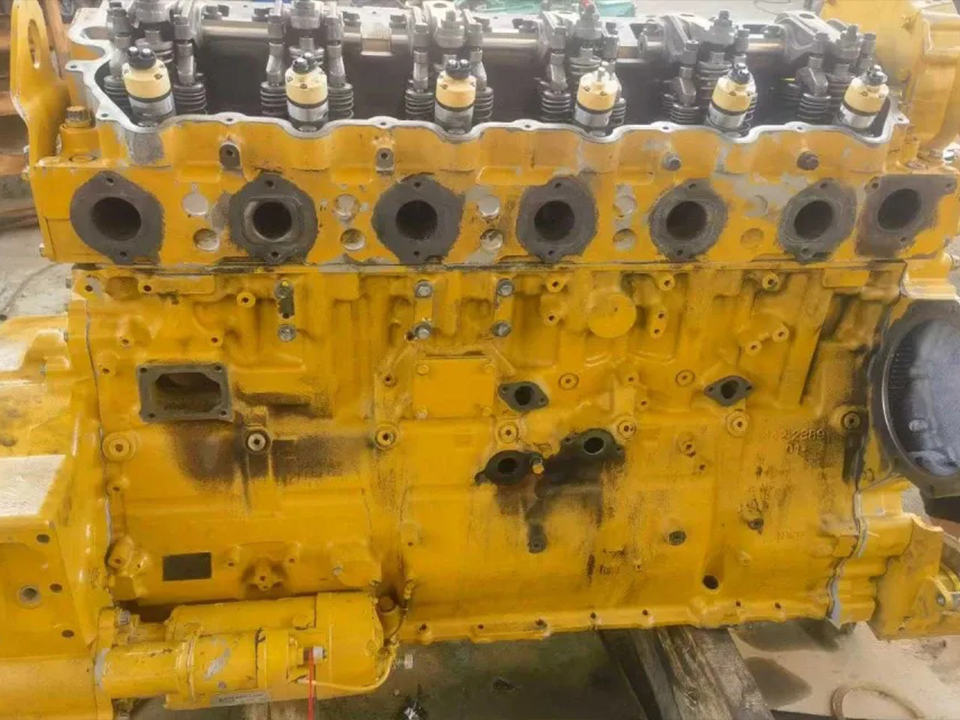
A C15 in-frame overhaul can make sense—sometimes. When the bottom end hasn’t been rattling itself stupid, when oil pressure history isn’t a horror story, when the pan doesn’t look like a glitter bomb, when the counterbores are still honest, when coolant hasn’t been sneaking into places it has no business being, then sure, keep it in chassis and move like grown-ups.
But if I see wiped shells, heat history, fuel wash, low hot oil pressure, fretting around the liners, or a head that’s been cooked more than once, I stop pretending. That’s not a quick in-frame. That’s an out-of-frame trying to disguise itself as a cheaper conversation.
And shops know this. Some just won’t say it early enough.
What I check before I even think about a Cat C15 overhaul kit
Not the parts catalog. The symptoms.
From my experience, too many rebuilds start with somebody shopping a Cat C15 overhaul kit before anybody has done the boring detective work: cold start behavior, blow-by, crankcase pressure, coolant chemistry, cut filters, injector balance, shaft play in the turbo, charge-air leaks, and a real mechanical oil-pressure check instead of relying on a dash reading that may as well have come from a fortune cookie.
And I don’t separate the overhaul from the contamination story. I never have. If the fuel side has been sketchy, if the pump has been weak, if filtration has been treated like a suggestion, that mess follows the rebuild into its second life. Which is why I’ll still reference Cat 386-0189 lift-pump cross-reference notes and heavy-duty fuel-filter contamination control while planning the job—not because they’re magical, but because dirty fuel quietly wrecks expensive optimism.
Air side matters too. More than people admit. Dust a C15 once, or let it nibble grit long enough through a bad seal, and you’ll spend the next few months arguing about whether the rebuild “failed” or whether it was doomed before the kit ever left the box. So yes, I drag in diesel oil-filter specification checks and air-filter replacement discipline for dusty service during quoting. Prevention is cheaper than shop theater.
The stuff that blows up the quote after teardown
This part hurts.
The phrase “C15 engine rebuild” sounds neat on paper, but the paper version is a liar. What wrecks the estimate is never just the kit. It’s the head that won’t pass. The injectors that were already tired. The turbo with enough shaft movement to make you wince. The contaminated oil cooler. The CAC that should’ve been cleaned months ago. The water pump that’s “probably fine” until it isn’t. The rocker gear that looks okay from six feet away and awful from six inches away.
And the labor. Always the labor.
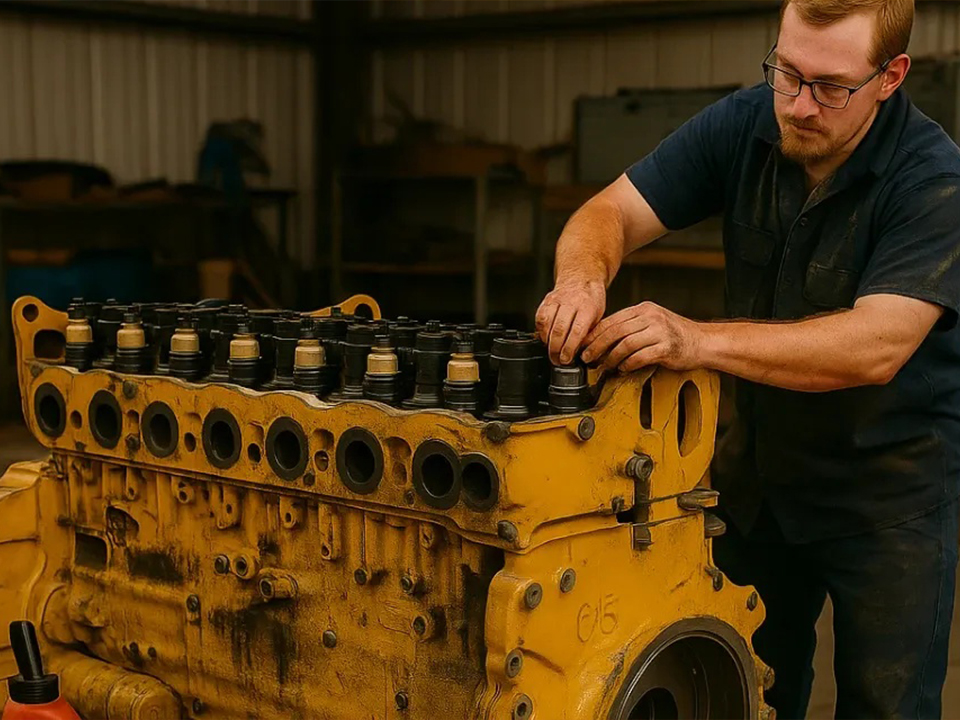
I’ve seen people budget a Caterpillar C15 rebuild step by step like they were assembling patio furniture: remove old bits, install new bits, fire it up, cash the invoice. That’s fantasy. Real shop work is measure-clean-measure-argue-order-wait-measure-again. Ugly rhythm. Necessary rhythm.
The emissions-delete crowd still sells fairy tales
I’m not buying it.
Any shop that tries to bundle a fresh overhaul with a wink-wink delete tune is not offering insider knowledge. It’s offering liability with a dyno sheet attached. In March 2024, the DOJ said a Washington diesel shop owner admitted directing employees to tamper with pollution controls on about 375 diesel trucks and collected $538,477 in fees for the work. That isn’t rumor-board gossip; that’s a federal case with numbers attached.
And the policy mood isn’t exactly softening. In October 2024, EPA announced nearly $125 million under the Diesel Emissions Reduction Act program to upgrade or retire older diesel engines, with about 70 national DERA projects tentatively selected. Read that again and tell me the market is headed toward casual tampering. It isn’t.
That road gets narrower.
How to overhaul a Caterpillar C15 engine without lying to yourself
It’s not glamorous.
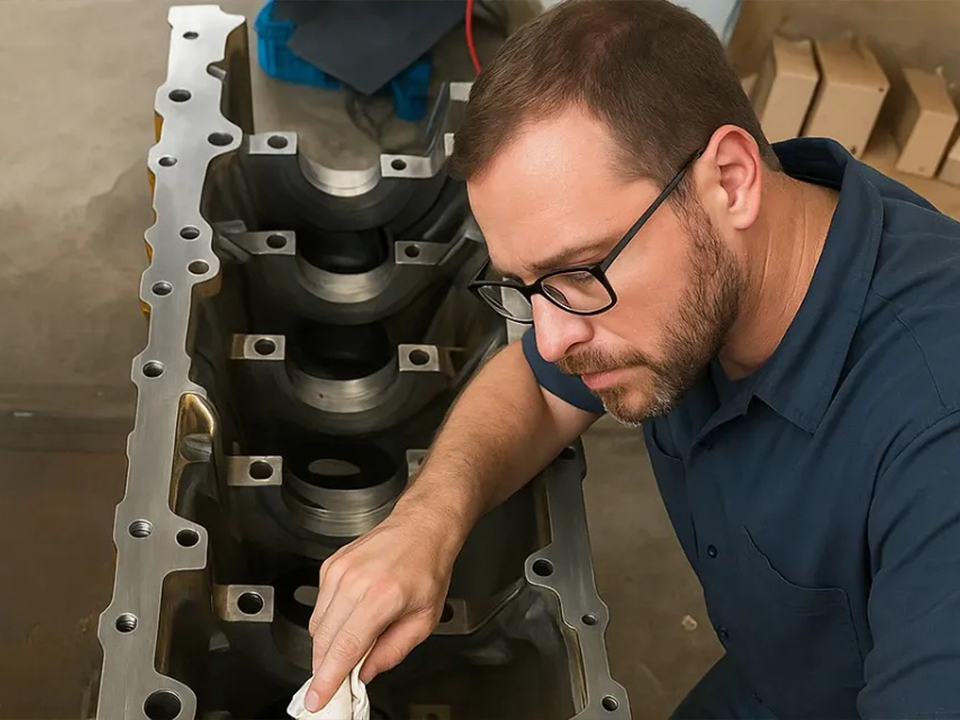
First, prove the failure mode. Not the rumor. Not the customer’s theory. The actual failure mode. Then tear it down and inspect the block, crank, rods, head, liner seats, cam train, and oiling components like the next warranty claim is coming out of your own pocket.
Then comes the fork in the road. If the block, crank, and lower-end condition still have manners, maybe a C15 in-frame overhaul stays on the table. If not, quit trying to force the cheap answer. Put it on a stand. Do the out-of-frame. Eat the time now or eat it later with more parts and more embarrassment.
And yes, cleanliness matters that much. I know that sounds like old-man shop preaching, but it’s still true. A fresh set of bearings doesn’t care how confident you sounded at the estimate desk. One missed passage, one bit of trash left in the cooler circuit, one lazy wash job, and the engine will teach humility all over again.
Caterpillar C15 engine rebuild step by step — the version that actually happens in a busy shop
Yet here’s how it usually goes when the job is being done by people who’ve already been burned before.
We verify pressures. We confirm blow-by. We sample. We cut filters. We tear down. We inspect the head, the deck, the liner counterbores, the crank, the rods, the cam, and every wear pattern that tells on the engine’s past life. Then we argue—politely, usually—about what’s reusable and what belongs in the scrap pile.
Then the machine-shop reality lands.
Then the parts delays.
Then the phone call nobody wanted to make on day one.
That’s why I laugh a little when someone asks for the “best C15 overhaul kit” as if the box itself decides the outcome. No. The best kit is the serial-correct one installed on an engine that still deserves rebuilding, by a shop that isn’t cutting corners because the customer flinched at the honest estimate.
In-frame vs. out-of-frame: the numbers I actually use at the counter
Decision Point
C15 In-Frame Overhaul
C15 Out-of-Frame Overhaul
When I consider it
Wear-related cylinder work, stable bottom-end history, no hard evidence of crank/block damage
Head work, injectors, turbo, cooler contamination, CAC cleaning
All of the in-frame risks plus crank, rods, block work, mounts, front/rear seal scope
Best fit
Fleet needs fast return and engine passes measurement
Owner wants the lower-end truth, not the cheaper story
Biggest mistake
Treating it like a kit install
Pretending it should cost only a little more than an in-frame
Those numbers aren’t sacred. They’re just real enough to stop the daydreaming.
The call nobody likes to make
Pull it, or don’t.
If compression is lazy, blow-by is climbing, oil use is getting obnoxious, and the truck around the engine still has a decent frame, driveline, cooling package, and business case, then yes—a Caterpillar C15 overhaul can still be smart money. Painful money, but smart.
But if the whole truck is tired—electrical gremlins, cooling issues, driveline slop, deferred maintenance piled to the roof—then the rebuild turns into emotional spending dressed up as asset management. I’ve seen that movie. It ends badly.
FAQs
What is a C15 engine overhaul?
A C15 engine overhaul is the structured rebuilding of a Caterpillar C15 diesel to restore compression, oil control, bearing life, sealing integrity, and operating reliability by replacing worn components, inspecting hard parts, correcting machine-work problems, and validating the finished engine under proper pressure and temperature conditions.
After that neat definition, here’s the real version: it’s a teardown, a measurement session, a contamination fight, and a judgment call about whether the block and crank still deserve your money.
Is a C15 in-frame overhaul enough?
A C15 in-frame overhaul is enough only when wear is mainly confined to the cylinder pack and upper engine, while the crankshaft, block structure, counterbores, oiling system, and lower-end history remain healthy enough to pass inspection without signs of deeper mechanical damage or contamination.
If the pan shows glitter, if the hot oil pressure has gone soggy, or if coolant has been freelancing through the engine, I don’t care how attractive the in-frame quote looks. It’s the wrong job.
How long does a Caterpillar C15 overhaul take?
A Caterpillar C15 overhaul usually takes from one to three working weeks depending on whether the job stays in-frame or becomes an out-of-frame rebuild, how much machine-shop work is needed, what parts are backordered, and whether the head, crankshaft, injectors, turbocharger, or cooling components expand the repair scope.
Could it move faster? Sure. Should it? Not always. Speed and quality don’t naturally hold hands in diesel work.
What should be replaced during a C15 engine rebuild?
A C15 engine rebuild should replace the core wear package and any failed support components, commonly including liners, pistons, rings, bearings, seals, gaskets, required fasteners, filters, fluids, and—when inspection says so—injectors, turbo-related parts, hoses, sensors, cooling pieces, and lubrication components that can compromise the fresh build.
In shop language: anything that can starve it, cook it, contaminate it, or lie to the ECM deserves suspicion.
What is the best C15 overhaul kit?
The best C15 overhaul kit is the serial-number-correct kit that matches the exact engine family, piston and liner configuration, emissions setup, and repair scope, and it only becomes “best” when the block, head, crankshaft, and liner-seat measurements prove the engine is still a valid rebuild candidate.
I know that’s less exciting than brand hype. It’s still true. A cheap kit on a bad foundation is just an organized mistake.
If you’re staring down a C15 engine overhaul right now, don’t shop the box first. Shop the diagnosis. Verify pressure. Check the fuel story. Check the air story. Challenge every reused hard part. And if a shop promises speed before measurements, walk. That’s not confidence—it’s salesmanship wearing coveralls.