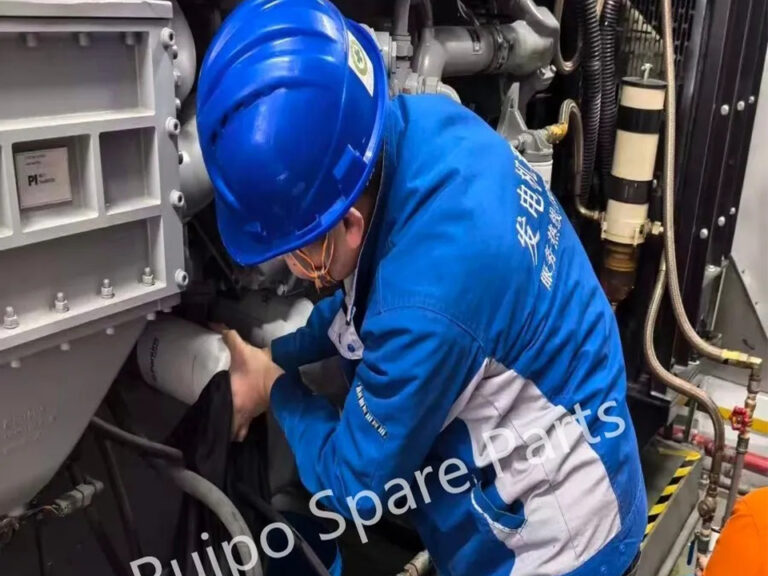
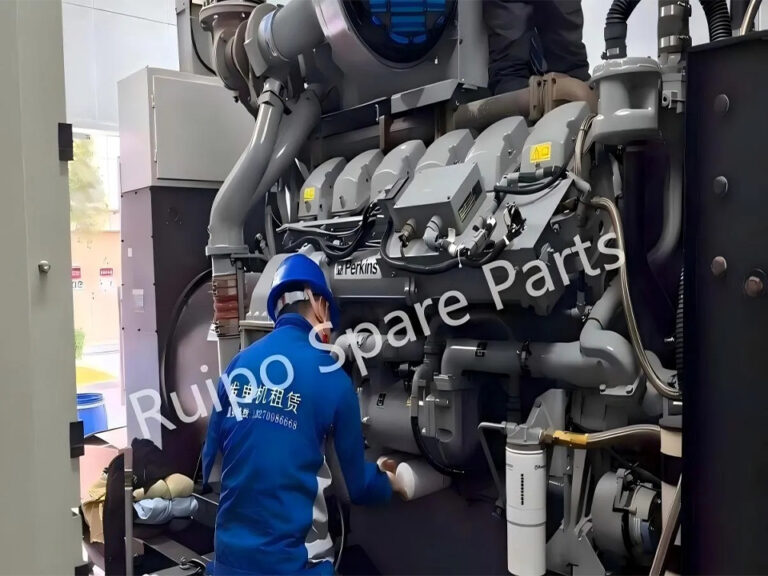
“The supplier gave us a true one-stop parts solution. Their team matched the right Caterpillar, Perkins, and filter parts for our equipment, and the support stayed fast and professional from inquiry to delivery.”
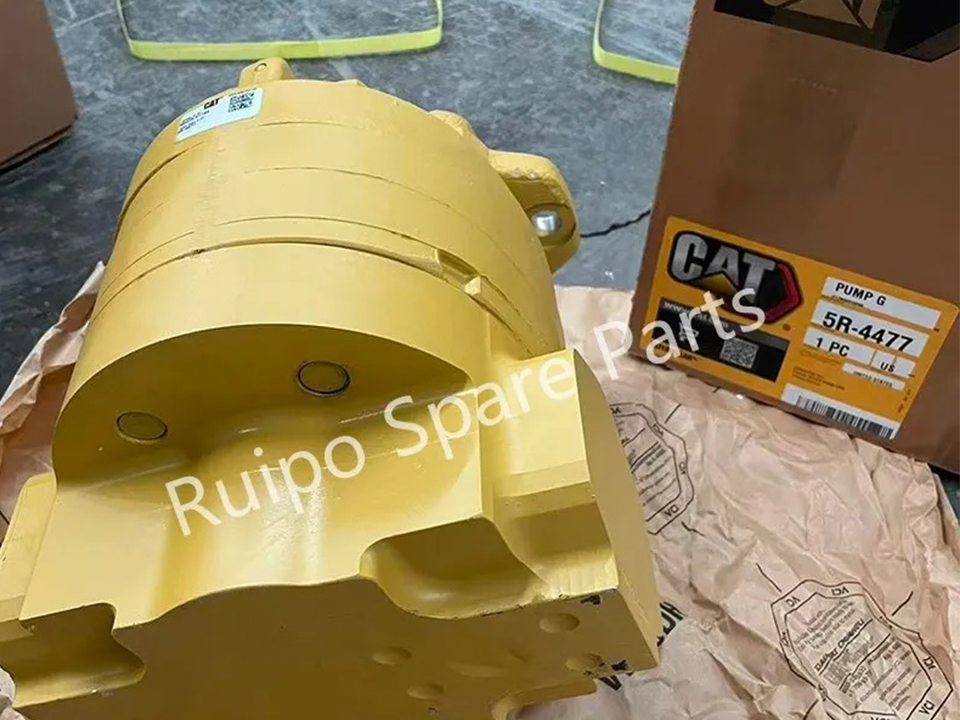
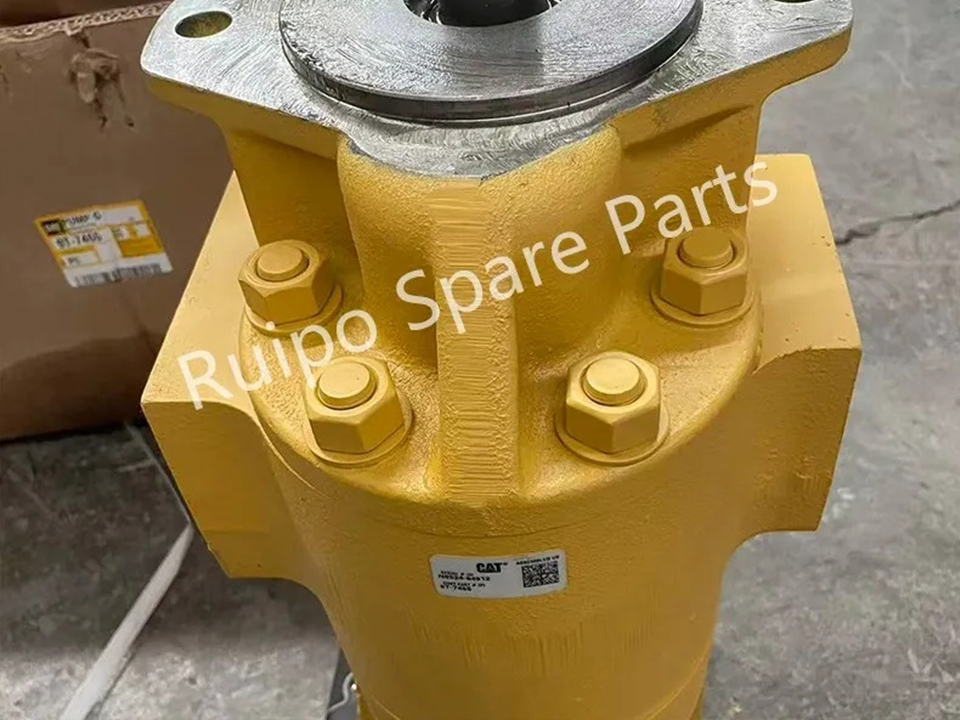
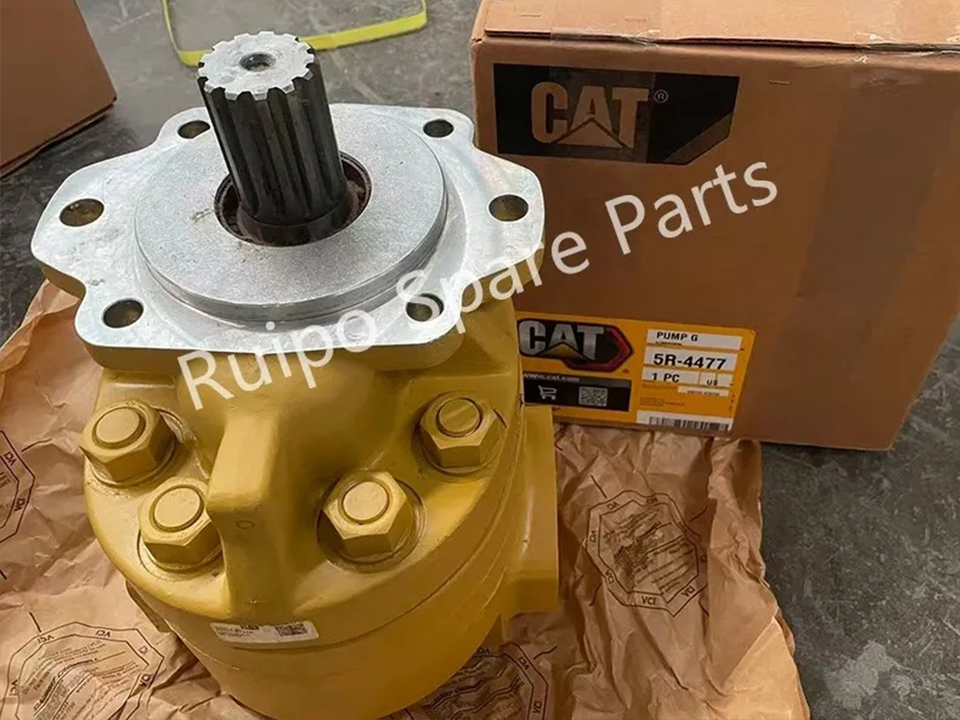
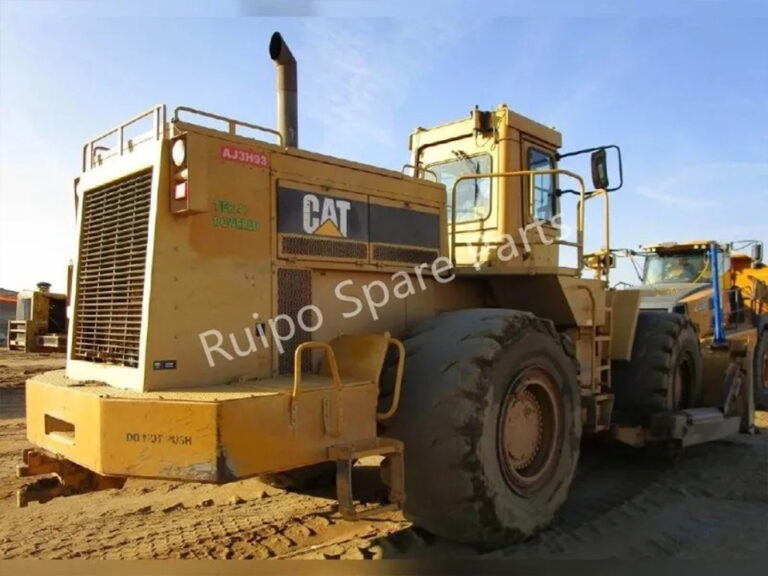
CAT 834B Hydraulic System Guide & 5R4477 Hydraulic Pump
Most shops guess. And on old iron, especially a CAT 834B that’s been worked, patched, resealed, overheated, and “fixed” by three owners and six different mechanics, guessing is how a buyer ends up with the wrong reman pump on the bench and the same dead hydraulics on the machine by Friday afternoon. Commercial intent. No question.
Table of Contents
This search isn’t academic — it’s buyer intent with grease on it
I frankly believe this keyword tells on itself. Somebody searching CAT 834B hydraulic pump plus 5R4477 hydraulic pump usually isn’t browsing; they’re trying to confirm fitment, price-risk, and whether the pump is actually the villain or just the part most likely to get blamed first. Cat’s own 5R-4477 listing ties the part to the 834B, 836, and certain 834U/834S machines, while also warning that configuration changes can break fitment on the real machine in front of you. That’s commercial investigation, not theory.
And that matters.
Because old dozer hydraulics don’t fail politely. They get lazy hot, they aerate, they chatter, they wet the belly pan, and then somebody says, “pump’s smoked,” as if the system didn’t spend months eating itself first.
What the 5R4477 listing tells you — if you read it like a mechanic
Here’s the ugly truth: catalog pages leak more truth than half the sellers do. Cat marks 5R-4477 as factory fit, remanufactured, non-returnable, and replaced, then parks related sealing and plumbing items right beside it — 9X-7371, 2H-6338, 4J-0522, even the 8V-3070 hydraulic pump hose. That’s not decoration. That’s a clue trail. It says the job often lives in the sealing faces, hose condition, and contamination path just as much as in the pump body itself.
I’ve seen this movie before. A machine comes in weak on lift or blade response, somebody throws a reman unit at it, and two weeks later the fresh pump is whining because the suction side was still sucking air through tired plumbing. Same symptoms. New invoice.
The CAT 834B hydraulic system is old-school, and old-school systems punish sloppy diagnosis
But the dashboard layout tells you how Cat expects the machine to be supported: hydraulics, hoses and tubes, filters and fluids, maintenance and repairs, manuals and resources. It even surfaces the 100-hour initial service and 3000-hour maintenance references right on the equipment page. That’s Cat quietly saying, “Don’t play hero — do the boring service work first.”
And I’ll say the part nobody likes hearing: a lot of so-called pump failures are really dirt, varnish, suction leaks, or trash filtration habits. Cat’s own filter catalog for this ecosystem backs that up. The 1R-0732 is listed as a Standard Efficiency Hydraulic/Transmission Oil Filter, while 132-8875 is listed as an Ultra High Efficiency Hydraulic/Transmission Oil Filter compatible with the 834B, and Cat says its UHE media removes a higher proportion of fine particles in severe applications. That’s not marketing fluff when you’re staring at a tired hydraulic circuit from the Reagan era.
Three words: stored energy kills. OSHA’s lockout/tagout material says hazardous energy includes hydraulic energy, and it warns that unexpected startup or the release of stored energy during servicing can cause serious injury or death. The OSHA factsheet goes further — compliance with lockout/tagout prevents an estimated 120 fatalities and 50,000 injuries each year, and injured workers lose an average of 24 workdays recuperating. That’s not abstract policy-speak. That’s the cost of getting casual around pressurized systems.
So no, I don’t treat a CAT 834B hydraulic pump replacement like a dumb bolt-off, bolt-on parts swap. Not on a machine this old. Not with oil pressure, stored energy, hot components, and the very real chance that the “bad pump” is just the last thing in line to get blamed.
My order of attack before I condemn the pump
Yet this is where shops get weirdly impatient. If the hydraulics are lazy only when hot, I start thinking internal leakage, thin oil, or worn rotating guts; if it chatters cold, foams, or growls like it’s eating gravel, I go straight to the suction side, tank level, hose integrity, and air ingress before I start pricing pumps. Simple. Usually.
And leaks? That’s where the parts cannon comes out way too early. A wet pump nose, seep at the mounting face, or oil mist around old plumbing doesn’t automatically mean the whole unit is done — sometimes the real fix is in the seals, clamps, face cuts, or tired hose wall, which is exactly why the 5R-4477 page keeps those related pieces so close to the main listing.
Symptom on CAT 834B hydraulic system
What I suspect first
What I inspect before buying 5R4477
Why shops get burned
Slow hydraulic response only after warm-up
Internal wear, thin oil, contamination
Hot pressure and flow, filter history, oil sample
Heat-related loss gets blamed on the pump before anyone checks oil condition
Reseal jobs get skipped because replacement sounds cleaner
Weak function plus dirty filter history
Particle damage through the circuit
1R-0732 vs 132-8875 vs 4T-3133 service logic
Standard service intervals get ignored until wear becomes obvious
Repeat failure after recent replacement
Contamination left in system
Flush plan, tank cleanliness, hose debris, downstream valves
The first pump was not the root cause
When replacing the CAT 834B hydraulic pump actually makes sense
I’m not anti-replacement. I’m anti-lazy replacement. If hot testing shows real pressure or flow loss, the inlet side is sound, the oil isn’t cooked, and the machine still falls on its face under load, then yes — start looking hard at the 5R4477 hydraulic pump. But buy it like an adult: verify serial, arrangement, and current machine configuration first, because Cat explicitly warns that changed configuration can make a “matching” part not fit the machine as it sits today.
And downtime isn’t getting cheaper. The U.S. Bureau of Labor Statistics says heavy vehicle and mobile equipment service technicians posted a $62,740 median annual wage in May 2024, with about 21,700 openings projected each year on average from 2024 to 2034. Translation: good wrench time is expensive, scarce, and wasted fastest by bad diagnosis.
FAQs
What machines use the 5R4477 hydraulic pump?
The 5R4477 hydraulic pump is a Cat factory-fit reman pump listing associated with the 834B wheel dozer, 836 landfill compactor, and certain 834U and 834S machines, but Cat also warns that actual fit still depends on the machine’s present configuration and should be dealer-verified before purchase. Aftermarket sellers tend to bury that part because it slows the sale.
How do I know my CAT 834B hydraulic pump is really failing?
A truly failing CAT 834B hydraulic pump usually means verified loss of hot pressure or flow, persistent weak response under load, abnormal noise after inlet checks, or leakage and internal wear severe enough that seals and plumbing corrections won’t restore performance to spec. I’d still rule out suction leaks, dirty oil, and filter neglect before I condemn it.
How should a CAT 834B hydraulic pump replacement be done safely?
A safe CAT 834B hydraulic pump replacement means isolating hazardous energy, controlling hydraulic pressure, locking out startup sources, draining and containing oil, confirming fitment by machine configuration, and only then removing, resealing, installing, priming, and load-testing the unit before the machine goes back to work. Skip the lockout piece and you’re gambling with stored energy, not just downtime.
What’s the best filter strategy for a CAT 834B hydraulic system?
The best filter strategy for a CAT 834B hydraulic system is to match filtration efficiency to contamination risk and duty cycle, using documented service intervals and the correct hydraulic or hydraulic/transmission filter rather than whatever element happens to be on the shelf that day. I’d rather overspend on clean oil than underspend on another reman pump.
Is the 5R4477 hydraulic pump an easy off-the-shelf buy?
The 5R4477 hydraulic pump is not a casual off-the-shelf purchase because Cat identifies it as remanufactured, non-returnable, and replaced, while also warning that machine configuration changes can affect compatibility even when the model family looks correct in the catalog. That combination is exactly why experienced buyers verify first and click later.
If you want this page to convert, don’t make it sound like a sterile brochure. Tell readers what the parts pages are really saying, tell them where shops usually screw up, and tell them why the cheap diagnosis is often the expensive one. That’s the page people trust — and trust is what gets the call.